
For people who are new to truck scales, weighbridges, or industrial vehicle weighing systems, a Truck Scale Ticket may look like nothing more than a few weight figures and some vehicle information. In actual business operations, however, it is often closely related to cargo settlement, inventory management, transportation records, supplier reconciliation, and may even directly affect purchasing and sales amounts.
Especially in industries such as grain, mining, aggregates, construction materials, scrap recycling, ports, logistics, chemicals, and warehousing, a truck may need to be weighed once or even several times a day. Truck scale ticket formats vary from company to company. Some use Gross / Tare / Net, while others use Inbound / Outbound. Some systems also display vehicle number, customer name, commodity, time, scale ID, operator, and other information.
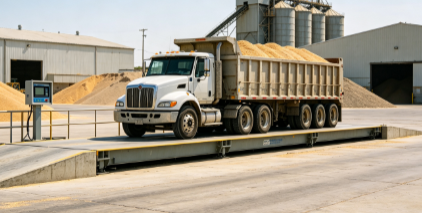
Therefore, reading a Truck Scale Ticket correctly is not simply about looking at one number.
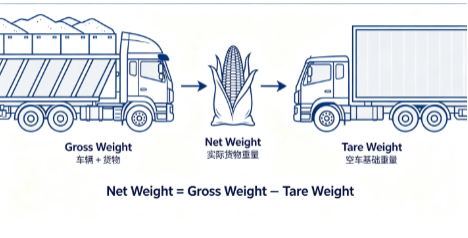
The most basic and important formula is:Net Weight = Gross Weight − Tare Weight
That is:Net Weight = Gross Weight − Tare Weight
In most transportation and bulk material weighing applications, Net Weight usually represents the actual cargo weight.The following sections explain how to correctly read a Truck Scale Ticket from the perspectives of basic fields, weighing procedures, real examples, common errors, and digital truck scale systems.

1. What Is a Truck Scale Ticket?
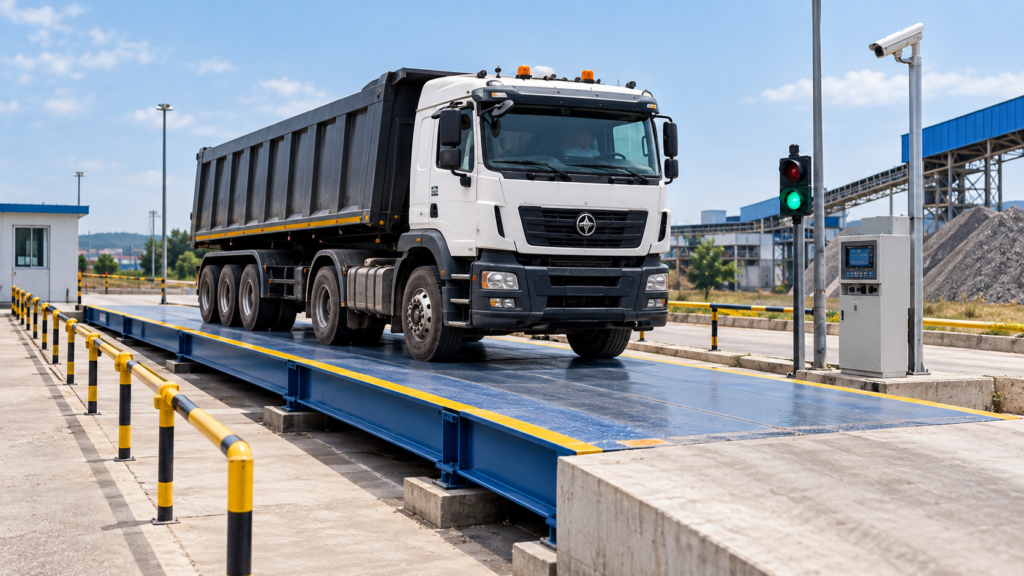
A Truck Scale Ticket can be understood as a truck weighing ticket, weighbridge ticket, or truck scale receipt.
When a truck drives onto a Truck Scale, or weighbridge, the weighing system measures the vehicle weight. Depending on the company’s operating process, the vehicle may be weighed once or may need to complete two separate weighings.
After weighing is completed, the system usually generates a ticket recording the transaction.
The ticket can be a paper printout, a digital weighing ticket, a PDF archive, or an electronic record stored in the software system. It can also be used as linked data for integration with ERP, warehouse management, and logistics systems.
In the North American market, the more common term is:Truck Scale TicketIn the UK, Europe, the Middle East, Africa, and parts of Asia, another commonly used term is:Weighbridge TicketIn practice, both usually refer to the same type of document.
2. Why Is a Truck Scale Ticket Important?
Many people think of a truck scale ticket as “just a piece of paper showing weight,” but in commercial operations it actually serves several important functions.
1. Used to Determine the Actual Cargo Weight
The ticket is used to calculate the actual weight of the cargo. For example, if a truck carrying crushed stone has a gross weight of 72,900 lb and an empty tare weight of 28,600 lb, subtracting the tare from the gross gives a net cargo weight of 44,300 lb. Many bulk materials are not charged by truckload, but by weight, so the calculated net weight directly affects the final transaction amount.
2. Used for Purchasing Settlement
In grain purchasing, scrap steel recycling, coal procurement, and other raw material purchasing scenarios, after suppliers deliver goods to the facility, companies generally use the truck scale ticket to verify the actual quantity received. The weight data shown on the scale ticket can directly serve as the basis for purchasing settlement.
3. Used for Sales and Shipping
For quarries, sand and gravel plants, concrete companies, mines, and similar operations, trucks also need to be weighed before leaving the facility.
For example, a customer may purchase 20 tonnes of crushed stone, but the actual loaded amount may be:20.35 tonnesThe actual sales weight is generally based on the truck scale result.
4. Used for Inventory Management
Vehicle weighing records can be linked to inventory systems.For example, if 35 trucks enter the facility during the day with a total net cargo weight of 860 tonnes, the warehouse or factory can use these weighing records to update inventory data.
5. Used for Transportation and Traceability
A complete truck scale ticket usually records the vehicle, driver, weighing time, commodity, customer, supplier, and the ID of the truck scale used. If a weight dispute occurs, this information can play an important role in tracing and verifying the transaction.
3. Real Example
1: Grain Delivery to a Feed Mill
The following example uses a typical grain transportation scenario to explain a Truck Scale Ticket.
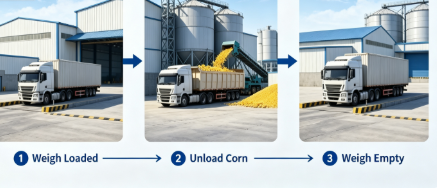
Suppose a truck is delivering corn to a feed mill.First Weighing: Loaded Vehicle EntersThe truck enters the facility fully loaded with corn.
The truck scale record is as follows:
| Ticket Field | Record |
| Ticket No. | 0001258 |
| Truck No. | TRK-1025 |
| Commodity | Corn |
| Gross Weight | 79,240 lb |
| Date | June 12 |
| Time | 09:18 |
| Scale ID | Scale 01 |
At this point:79,240 lb = Vehicle + Corn
Second Weighing: Vehicle Leaves After Unloading
After unloading the corn, the truck is weighed again and the tare weight is recorded as 31,860 lb. The system subtracts this tare weight from the gross weight of 79,240 lb and calculates a net weight of 47,380 lb. This is the actual amount of corn received by the feed mill.
What Should the Feed Mill Staff Check?
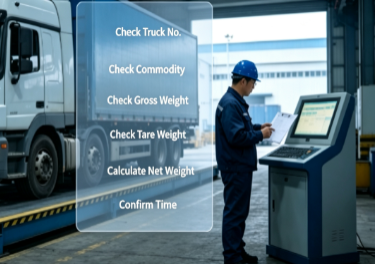
At a minimum, the following items should be verified:
When checking the truck scale ticket, confirm that the truck number is correct, the vehicle matches the order, the commodity is corn, the gross weight corresponds to the loaded vehicle, the tare weight corresponds to the vehicle after unloading, gross weight minus tare weight matches the net weight, and the date and time are correct. Any error in these items may cause inventory or settlement problems.
4. How Can You Tell Whether a Truck Scale Ticket Is Abnormal?
In addition to using the basic formula, abnormalities can also be identified based on practical operating experience.
For example, if the normal empty tare weight for the same type of truck is usually around 30,000–33,000 lb, but one ticket shows a tare weight of 38,500 lb, you should check whether the trailer was changed, cargo remained in the truck, extra equipment was added, the weighing record was incorrect, or the wrong vehicle was selected.
Abnormal data does not necessarily mean that the truck scale is faulty, but it should always be reviewed and verified.
5. What Is the Difference Between Paper and Digital Truck Scale Tickets?
Traditional truck scale systems usually generate paper weighing tickets. Their main advantages are that they are easy to read, drivers can take them directly, and they do not require a mobile phone.
However, the disadvantages are also obvious. Paper tickets can easily be lost, are inconvenient to search, require manual data entry, and may result in duplicate records.
Today, more and more weighing systems are moving toward digital records.
6. When Should a Truck Be Reweighed?
In cases where there is an abnormal discrepancy between gross weight and skin weight, inconsistent vehicle information, vehicle movement during weighing, unstable weighbridge readings, disputes over vehicle weight by the driver or customer, errors in the retrieved stored skin weight, the vehicle is not fully positioned on the scale platform, abnormal weighing zero point, or significant changes in the vehicle’s status after loading or unloading, it is recommended to re-verify and confirm the data.
7. Conclusion
To understand a Truck Scale Ticket, the most important thing is not to memorize a large number of complicated terms, but to first understand three basic concepts:
Gross Weight = Truck + Cargo
Gross Weight = Vehicle + Cargo
Tare Weight = Empty Truck
Tare Weight = Empty Truck or Baseline Vehicle Weight
Net Weight = Cargo
Net Weight = Actual Cargo Weight
The core formula is:
Net Weight = Gross Weight − Tare Weight
If the ticket uses Inbound Weight and Outbound Weight, do not automatically assume which one is Gross and which one is Tare. Instead, first determine whether the vehicle was loaded or empty when entering and leaving the facility.
For logistics companies, grain facilities, mines, aggregate plants, scrap recycling operations, and other bulk material businesses, a reliable Truck Scale Ticket is not only proof of weight, but also an important record connecting transportation, inventory, purchasing, sales, and financial data.
If a company handles a large number of vehicles every day, then in addition to choosing a stable Truck Scale, it should also pay attention to weighing indicators, vehicle identification, printing equipment, and weighing management software. Only a complete weighing system can make the entire process, from vehicle entry to final Truck Scale Ticket generation, clearer, more stable, and easier to trace.

Need customized model matching your production line, technical drawings and accurate quotation?
Submit your inquiry now, our engineering sales team will send full solution within 24 working hours.