

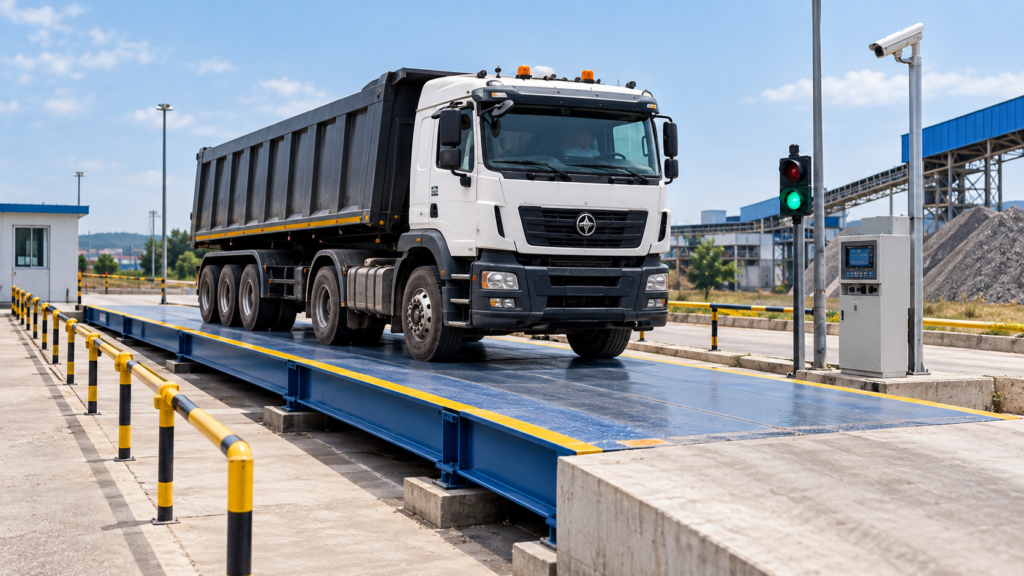
At first glance, using a truck scale is simple: drive onto the platform, stop and read the weight. That is basically true, but anyone who works around a weighbridge regularly knows that small details matter.
A truck that has not fully entered the platform, a scale that has not returned to zero, mud packed around the weighbridge, or an incorrect tare weight can all create problems with the final record.
This matters even more when truck weights are used to receive raw materials, calculate shipments or settle commercial transactions.
For most operations, the basic process is:
Loaded truck → Gross weight → Load or unload → Empty truck → Tare weight → Net weight
And the calculation is:
Net Weight = Gross Weight − Tare Weight
The following sections explain how this works in day-to-day industrial use.
1. What Happens When a Truck Drives onto a Truck Scale?
A truck scale, or weighbridge, is not just a large steel platform.
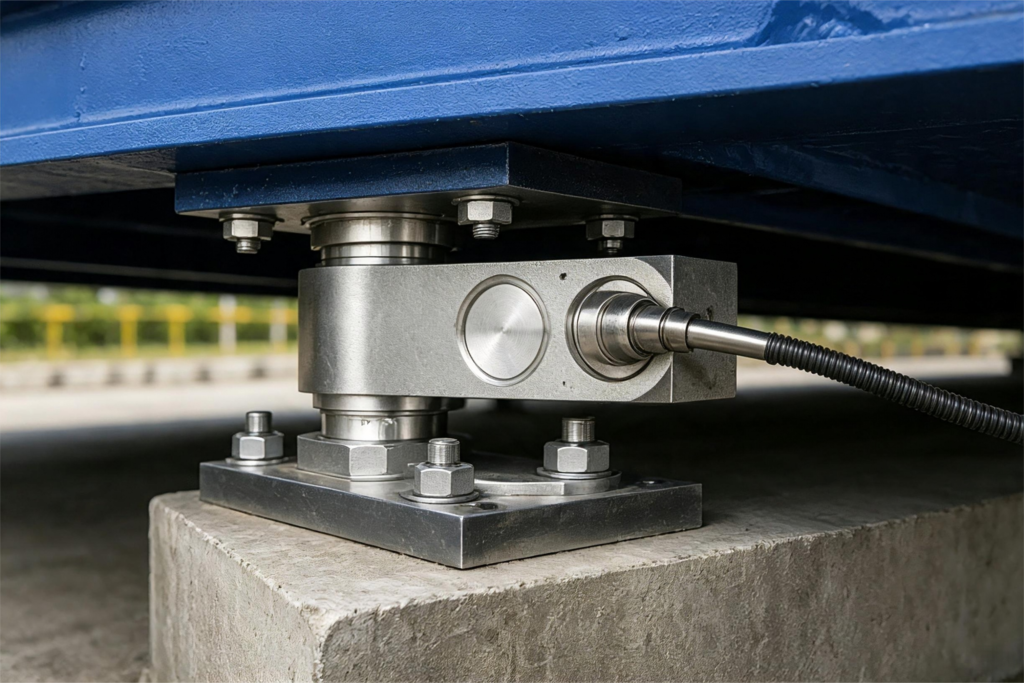
When a truck enters the weighbridge, its weight is transferred through the platform to the load cells installed underneath. The load cells convert that force into an electrical signal. The signal is then processed and displayed as a weight value on the indicator.
A typical system looks something like this:
Truck → Weighbridge → Load Cells → Junction Box → Weighing Indicator → Computer / Software
The load cells and weighing indicator are therefore just as important as the steel structure itself.
At a small factory, this may be the complete system. At a large mine, port or logistics yard, cameras, RFID readers, barriers and weighing software may also be connected.
2. Before the Truck Enters the Scale
You do not need a long checklist before every truck. A few basic checks are usually enough.
First, look at the indicator when the weighbridge is empty. It should be at zero.
If it is not, check the platform and the area around it before weighing the next vehicle. Stones, grain, mud, scrap or ice can sometimes collect around the weighbridge and interfere with normal movement.
At sites where different vehicles and materials are handled, it is also worth confirming:
- Vehicle or license plate number
- Material being carried
- Supplier or customer
- Delivery or order number
If this information is entered incorrectly, an accurate weight can still end up attached to the wrong transaction.
3. How to Use a Truck Scale Step by Step
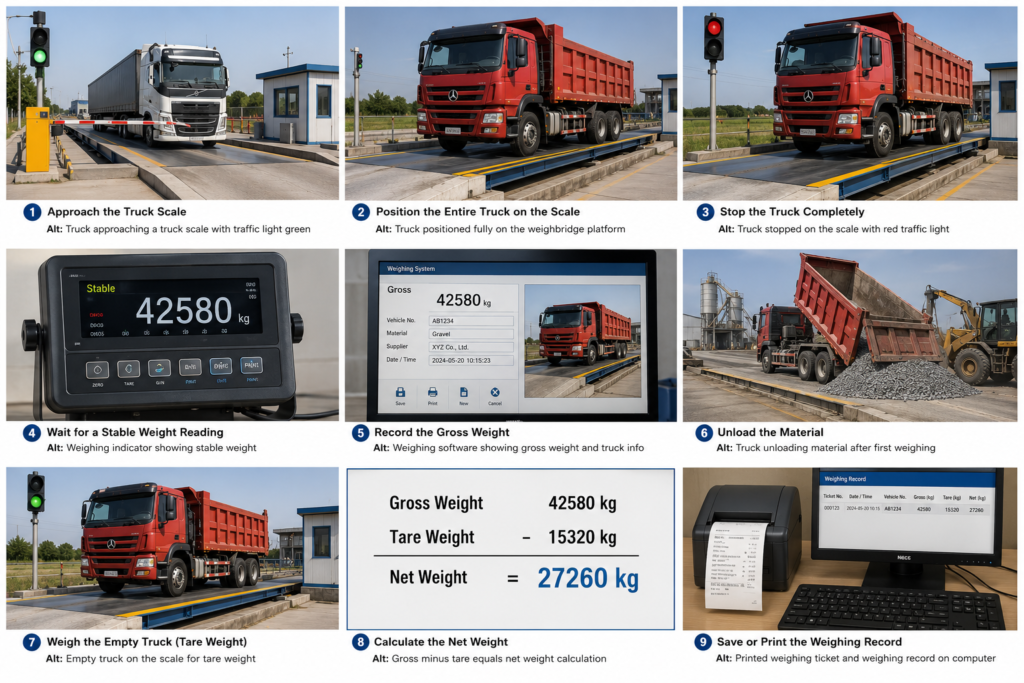
The exact operating procedure varies from one site to another, but most full-truck weighing follows the same basic sequence.
- Step 1: Drive onto the Scale Slowly
Approach the weighbridge at a controlled speed.
Hard braking is unnecessary and puts additional movement into the platform. Where traffic lights or barriers are installed, wait for the signal before entering.
- Step 2: Put the Whole Truck on the Weighbridge
For normal full-truck weighing, all of the required axles need to be on the weighing platform.
This sounds obvious, but it is one of the easiest operating mistakes to make with long tractor-trailer combinations.
The vehicle should sit reasonably centered on the platform and should not touch nearby rails, structures or another vehicle.
- Step 3: Stop and Let the Reading Settle
Once the truck is in position, stop completely.
Do not record the number while the vehicle is still creeping forward or backward. Give the weighing system time to reach a stable reading.
The stable weight will normally be shown on the weighing indicator.
- Step 4: Record the Gross Weight
If the vehicle arrives loaded, the first measurement will normally be its gross weight.
Gross Weight = Truck + Trailer + Cargo
Along with the weight, many companies record the vehicle number, material, supplier or customer, date and time.
The truck can then leave the weighbridge and continue to the loading or unloading point.
- Step 5: Load or Unload the Material
For an incoming delivery, the truck usually unloads its material before returning to the scale.
An outbound vehicle may follow the opposite sequence: weigh empty first, load the material, then return for the loaded weight.
Either method works. The important point is that the two readings belong to the same vehicle and transaction.
- Step 6: Weigh the Empty Truck
After unloading, the vehicle returns to the weighbridge.
Again, the truck should be fully on the platform and stationary before the reading is taken.
This measurement is the tare weight.
Tare Weight = Empty Truck + Trailer
- Step 7: Calculate the Actual Cargo Weight
Now the actual material weight can be calculated.
For example:
Gross Weight: 42,580 kg
Tare Weight: 15,320 kg
Therefore:
Net Weight = 42,580 − 15,320 = 27,260 kg
The cargo in this example weighs 27,260 kg.
With modern weighing software, the operator normally does not need to calculate this manually.
Step 8: Save or Print the Weighing Ticket
Once both readings are complete, the transaction can be closed.
Some sites still print paper tickets. Others store the information directly in weighing software or send it to an ERP system.
4. Truck Scale Use Is Different from One Industry to Another
The weighing principle stays the same. The working conditions do not.
- Mining and Quarrying
Mining sites may weigh ore, coal, stone, sand or aggregate. Heavy axle loads, dust and frequent vehicle movements put more demand on the weighbridge and load cells.
- Grain and Feed
At grain terminals and feed plants, weighing records may need to match a supplier, grain type, silo or production batch.
- Manufacturing
Factories often use truck scales for incoming raw materials and outgoing finished products. In this case, connection with inventory or ERP systems can be useful.
- Waste and Recycling
A loaded vehicle enters, gets weighed, unloads and returns to the scale. The difference between the two readings tells the operator how much material was received.
5. What Changes with an Unattended Truck Scale?
The weighing principle does not change when a truck scale becomes automated.
What changes is everything around the weighing process.
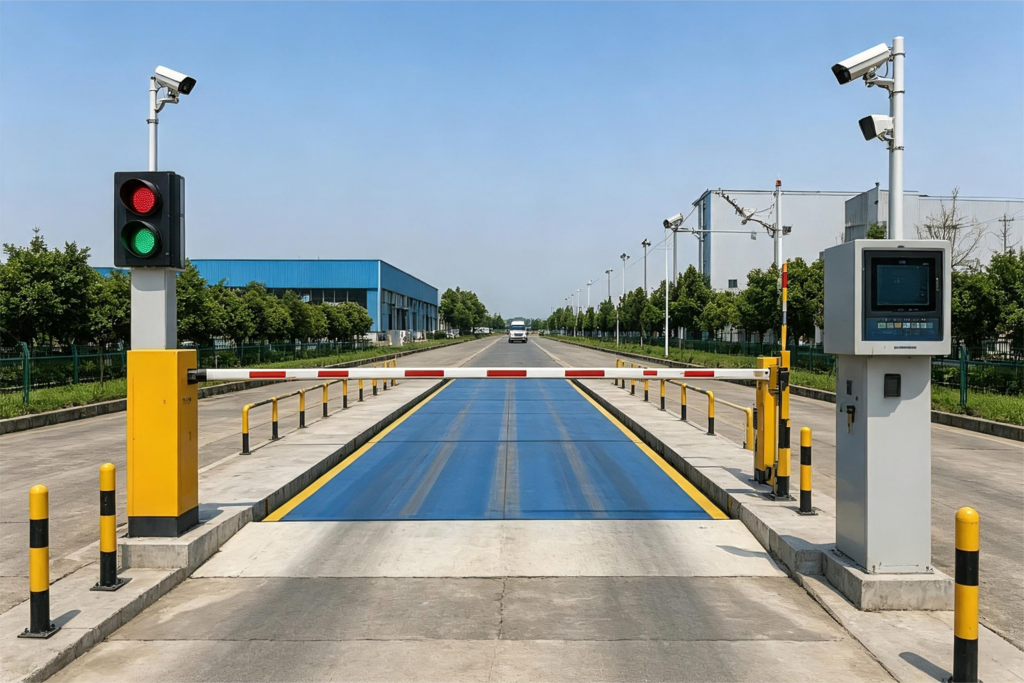
Instead of an operator checking every license plate and typing every weight into a computer, an automated station can handle some or all of these steps.
A typical process might be:
Truck arrives → RFID/License Plate Recognition → Barrier opens → Truck enters → Stable weight captured → Camera records → Data saved → Truck leaves
Depending on the site, the system may include:
- RFID readers
- License plate recognition cameras
- Traffic lights
- Automatic barriers
- Weighing indicators
- Weighing software
- Remote monitoring
For a factory weighing 15 trucks a day, full automation may not be necessary. For a mine, logistics yard or bulk terminal processing hundreds of vehicles, the calculation can be very different.
6. Keeping Truck Weighing Accurate
Truck scale accuracy is not only about calibration.
Day-to-day housekeeping and operating habits make a difference too.
Useful practices include:
- Keep the platform and surrounding gaps clean
- Check zero before operation
- Keep trucks fully on the platform
- Wait for a stable reading
- Inspect load cells and cables
- Keep drainage working properly
- Watch for foundation movement or damage
- Calibrate according to actual requirements
A scale working at a dusty mine will naturally need different attention from one installed in a clean factory yard.
7. Manual or Automated Truck Weighing?
Neither option is automatically better. It depends on the site.
| Function | Manual System | Automated System |
| Vehicle identification | Operator | RFID / ANPR |
| Weight recording | Manual/software | Automatic |
| Traffic control | Operator | Lights/barriers |
| Camera records | Optional | Usually integrated |
| Data management | Basic | Centralized |
| ERP connection | Optional | Easier to integrate |
| Typical use | Lower traffic | Medium/high traffic |
For low traffic, keeping the system simple can make sense.
As traffic increases, automation becomes more useful because it reduces repeated data entry and helps connect vehicle movement with weighing records.
8. FAQ
Drive the complete vehicle onto the weighbridge, stop, wait for a stable reading and record the weight. To determine cargo weight, obtain both gross and tare weights and subtract tare from gross.
For normal full-truck weighing, the required axles should be completely on the weighing platform.
Tare weight is the weight of the empty truck and trailer.
Yes. An unattended system can combine vehicle identification, cameras, traffic lights, barriers, weighing electronics and software to automate much of the process.
9. Conclusion
Using a truck scale is not complicated. Getting consistent, reliable records is where good operating practice matters.
Get the whole vehicle onto the platform. Let it stop. Wait for the reading to stabilize. Make sure gross and tare weights belong to the correct truck. Keep the scale clean and deal with unusual zero readings rather than ignoring them.
Those habits are simple, but they solve many of the problems seen in everyday truck weighing.
For sites with only occasional truck traffic, a conventional weighbridge and indicator may be all that is needed. Where traffic is heavier, adding vehicle identification, cameras, barriers and weighing software can make the process easier to manage.

Need customized model matching your production line, technical drawings and accurate quotation?
Submit your inquiry now, our engineering sales team will send full solution within 24 working hours.