
When purchasing a conveyor belt scale from China, many suppliers will tell you the same thing:
“We are a factory.” But for international buyers, this statement alone is far from enough.
A company may have its own workshop, but that does not necessarily mean it has complete manufacturing capability. Some suppliers mainly assemble purchased components, while load cells, weighing indicators, mechanical weighing frames, and even calibration work may be handled by third parties.
For a conveyor belt scale, this matters because final weighing performance depends on much more than the steel structure itself. If you are comparing a China conveyor belt scale factory, the most important question should not simply be: “Are you a factory?” Instead, you should confirm: “Which components can you actually manufacture, test, calibrate, and support in-house?”
Before placing an order, it is advisable to verify the following 10 areas:
1. Factory Ownership and Actual Production Site
The first step is to confirm whether the supplier actually operates its own manufacturing facility. You can ask the supplier to provide recent factory photos, production videos, workshop information, and details about which products are manufactured on site.
A genuine China conveyor belt scale factory should normally be able to show more than just a warehouse filled with finished products.
You should be able to see real production processes such as metal fabrication, sensor assembly, electrical wiring, weighing instrument production, system integration, product testing, and calibration. For larger-value projects or long-term cooperation, you can also request a live video factory inspection.
2. Actual Manufacturing Capability
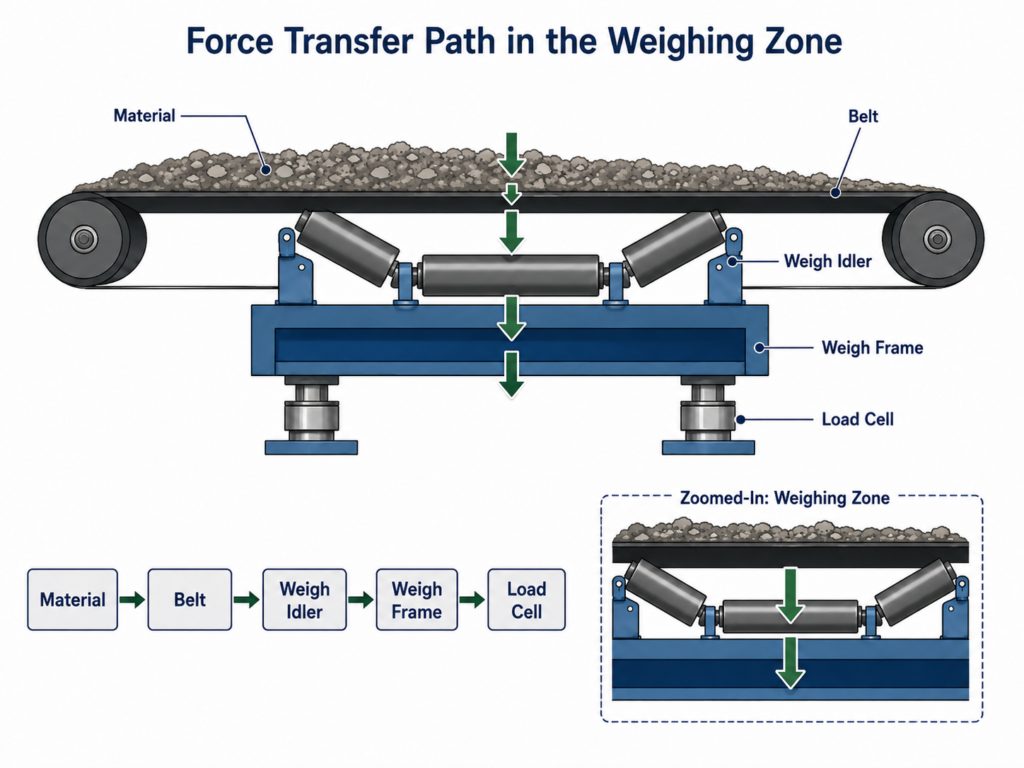
Before placing an order, confirm which components, such as signal cables and calibration systems, are manufactured by the supplier and which are externally sourced. There is nothing wrong with using selected third-party components, but the supplier must fully understand how all components work together. A capable electronic belt scale factory in China should be able to clearly explain how the mechanical weighing structure, sensors, signal processing, and software control form a complete weighing system.
3. Load Cell Manufacturing Capability
The load cell is one of the most critical components in a conveyor belt weighing system. If the load cell lacks long-term stability, problems such as zero drift, fluctuating weighing data, reduced repeatability, and long-term weighing errors may occur.
Therefore, buyers should confirm the load cell manufacturer, accuracy class, rated capacity, protection level, temperature compensation, and overload protection capability. If the supplier has its own experience in load cell R&D and manufacturing, it will generally have stronger control over the core weighing signal. This is especially important for heavy-duty applications such as mining, cement, aggregates, and power generation.
4. Whether the Factory Has an R&D Team
A genuine conveyor belt scale manufacturer should have more than production workers. Engineering design and technical support are equally important.
Before recommending a belt scale system, a professional R&D or engineering team should analyze project parameters such as belt width, belt speed, conveying capacity, material type, conveyor inclination, installation position, required accuracy, and site conditions. When a project cannot simply use a standard configuration, R&D capability becomes particularly important. If a supplier recommends the same model regardless of the customer’s operating conditions, its actual engineering capability should be examined more carefully.
5. Product Testing Capability
A conveyor belt scale system should undergo the necessary testing before shipment.
Buyers can directly ask the factory how load cells, weighing indicators, and speed sensors are tested, how junction boxes are inspected, and whether the complete system undergoes simulation testing before shipment. Common testing procedures generally include electrical performance checks, zero stability testing, signal output testing, insulation testing, overload testing, communication testing, and complete system simulation.
For a belt scale weighing factory in China, having a systematic testing process is one of the important indicators that distinguishes a genuine industrial manufacturer from a simple trading company.
6. Calibration Equipment and Calibration Methods
Calibration is essential to the stable operation of a conveyor belt scale.
A professional factory should be able to clearly explain how the belt scale is calibrated before shipment and which calibration methods are recommended after installation.
Common calibration methods include static test weight calibration, chain calibration, electronic calibration, and material calibration. Buyers should also confirm whether the weighing controller includes calibration functions and whether site operators can independently perform recalibration. A reliable supplier should not simply state that the product can achieve ±0.5% accuracy; it should also explain the installation conditions, material conditions, and calibration methods required to achieve that accuracy.

7. Quality Management Capability
Consistent batch quality is more important than producing one qualified sample.
Before placing an order, buyers can check whether the factory has established a complete quality control process covering incoming material inspection, production process inspection, assembly inspection, functional testing, final inspection, packaging, and shipment. For international projects, product traceability is equally important. If load cells, controllers, or speed sensors need to be replaced several years later, complete product identification and technical records can significantly reduce maintenance difficulty. Quality management should be integrated throughout the entire manufacturing process, rather than existing only as a certificate displayed on a website.
8. Completeness of Technical Documentation
Technical documentation is often overlooked during supplier selection. However, once the equipment arrives at an overseas project site, these documents become extremely important. A professional conveyor belt scale manufacturer should generally be able to provide product specifications, installation drawings, electrical wiring diagrams, user manuals, calibration instructions, weighing controller parameter-setting instructions, and maintenance guides. Complete and clear technical documentation can reduce installation mistakes and help site engineers identify and solve problems more efficiently.
9. Installation and Commissioning Support
A conveyor belt scale may be technically sound, but this does not mean it will automatically provide stable weighing data after installation. If the installation position is unsuitable, weighing performance may still be affected even when the equipment itself is of good quality.
In general, the weighing section should avoid areas where belt movement is unstable, loading points, discharge points, areas with obvious vibration, locations with large belt tension changes, and unsuitable conveyor geometry. Therefore, before placing an order, buyers should confirm whether the supplier can review conveyor drawings and recommend an appropriate installation position.
For overseas projects, remote installation guidance, commissioning support, electrical wiring assistance, and calibration support can significantly reduce project implementation risks.
10. After-Sales Service and Spare Parts Supply
A conveyor belt scale may operate continuously for many years. Therefore, long-term spare parts availability should also be confirmed before purchasing.
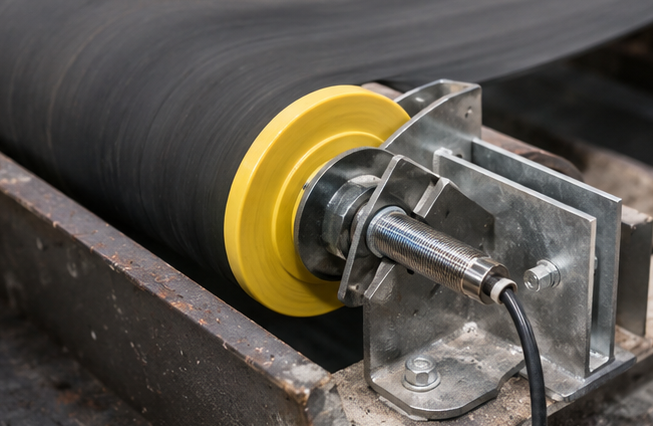
Buyers should ask whether load cells can be supplied over the long term, whether speed sensors have standard replacement models, whether weighing controllers will remain available, and whether stable replacement parts are available for junction boxes, communication modules, and other components. It is also important to understand how technical problems will be handled after installation. If the initial purchase price is low but spare parts become difficult to obtain or technical support is discontinued several years later, the total cost of ownership may actually be much higher.
How KELI Approaches Conveyor Belt Weighing Systems
When evaluating a conveyor belt scale supplier, the most important issue is not whether the company simply claims to be a “factory,” but whether it truly understands the complete weighing chain. In conveyor belt weighing system design, KELI places greater emphasis on the interaction between load detection, belt speed measurement, weighing signal processing, system calibration, data transmission, and actual industrial applications.
The LCS-Series Belt Scale can be customized according to actual conveyor operating conditions, including belt width, belt speed, conveying capacity, material characteristics, weighing accuracy requirements, and site installation environment.
For mining, cement, aggregates, power generation, grain handling, and other bulk material conveying industries, selecting a belt scale based on actual project conditions is generally more practical than simply choosing a standard model from a product catalog.

Need customized model matching your production line, technical drawings and accurate quotation?
Submit your inquiry now, our engineering sales team will send full solution within 24 working hours.