
Buying a truck scale is not simply about finding the lowest price.
A truck scale may be used every day for receiving raw materials, shipping finished products, inventory management, and commercial transactions. If the capacity, platform size, or installation method is not selected properly, additional modification and maintenance costs may arise later.
If you are researching how to buy a truck scale, the following guide can help you clarify several key points before requesting a quotation.
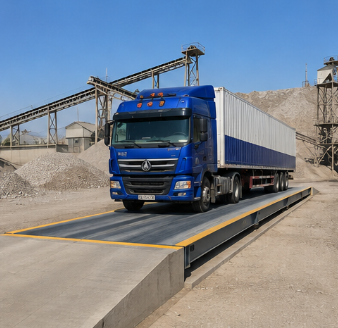
1. Determine What Types of Vehicles You Need to Weigh
The first step is not to compare prices, but to understand your actual operating conditions. You need to consider the vehicle type, maximum loaded weight, and approximately how many vehicles will be weighed each day.
Truck scales are widely used in grain and feed mills, mines and quarries, recycling facilities, logistics centers, building material plants, ports and warehouses, as well as chemical and manufacturing facilities. For example, a factory weighing only a few dozen delivery trucks per day will have very different requirements from a mine that weighs hundreds of heavy-duty trucks every day.
Defining your application first can help you avoid purchasing specifications that exceed your actual needs, while also preventing you from choosing a scale with insufficient capacity for future business expansion.
2. Choose the Right Truck Scale Capacity
The maximum weighing capacity is one of the most important factors when purchasing a truck scale.
Common capacities include: 60 tons, 80 tons, 100 tons, and 120 tons.
However, it is not recommended to choose a scale based only on the normal weight of your current vehicles. It is better to leave a reasonable safety margin for heavier trucks, future production growth, and occasional unusually heavy loads.
For example, if your heaviest fully loaded vehicle weighs around 60 tons, choosing an 80-ton or 100-ton truck scale can usually provide greater operating flexibility. You should also ask the manufacturer to confirm the scale’s maximum capacity and axle-load design requirements.
3. Determine the Correct Platform Size
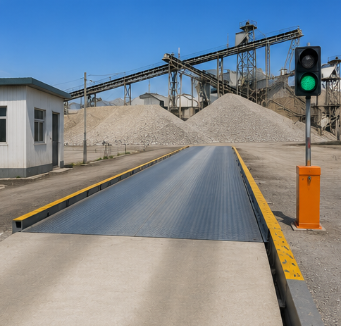
The length of a truck scale should be selected according to the size of the vehicles being weighed.
Common truck scale platform sizes include 3×12 m, 3×16 m, 3×18 m, 3×20 m, and 3.4×18 m. If the scale is mainly used for semi-trailers, tractor-trailers, and other long commercial vehicles, an 18-meter truck scale is a commonly used option. Before purchasing, it is recommended to provide the manufacturer with the length and configuration of your typical vehicles. During weighing, the entire vehicle should be positioned completely on the scale platform to obtain accurate and stable gross weight results.
4. Pit-Mounted or Pitless Truck Scale?
Truck scales are generally installed in two common ways: pit-mounted truck scales and pitless truck scales.
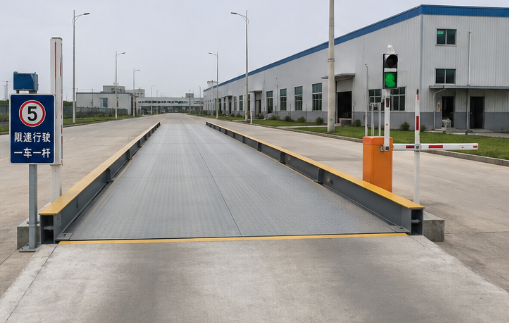
A pit-mounted truck scale is installed so that the platform is almost level with the surrounding ground, making it suitable for projects where site space is limited. However, foundation construction, drainage, and later maintenance are usually more complicated. A pitless truck scale is installed above ground, with access ramps at both ends.
This type of installation usually offers easier maintenance and simpler drainage, so it is widely used in factories, mines, and logistics facilities. The final choice should take into account available site space, drainage conditions, civil construction costs, and vehicle traffic flow.
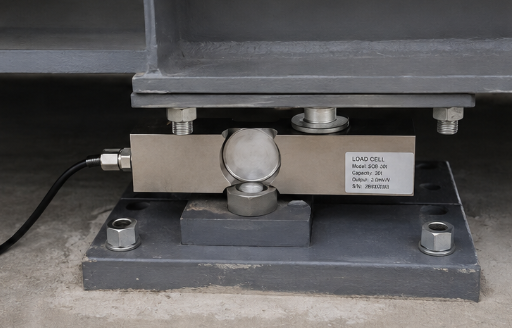
5. Pay Attention to Load Cells and Electronic Systems
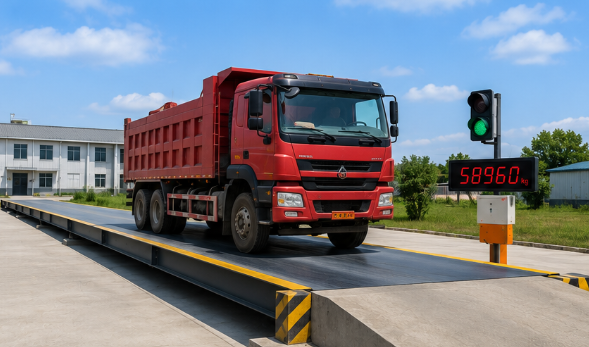
Load cells are one of the core components of a truck scale. When a vehicle drives onto the platform, the load cells convert the applied weight into electrical signals, which are then processed and displayed by the weighing indicator.
When comparing different suppliers, you should ask about load cell accuracy, protection rating, moisture resistance, overload protection, operating temperature range, and ease of replacement. Because truck scales are usually installed outdoors, they are often exposed to rain, dust, vibration, and temperature changes. Therefore, the reliability of the load cells and junction boxes is especially important. A lower-priced truck scale may eventually cost more to maintain if replacement parts are difficult to obtain.
6. Confirm Local Certification Requirements in Advance
If the truck scale will be used for commercial transactions, local legal metrology regulations must be checked before purchase.
For example, in the United States, if the weighing results are directly used for commercial transactions, Legal-for-Trade requirements may apply, and NTEP certification may also need to be considered. Other countries and regions have their own metrology and certification standards.
Therefore, during the quotation stage, it is recommended to inform the supplier of the installation country, specific application industry, and whether the equipment will be used for commercial transactions, so the manufacturer can recommend a suitable configuration based on local requirements.
7. Do Not Compare Truck Scale Prices Alone
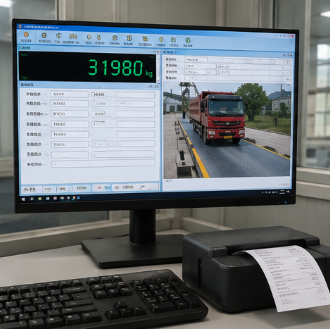
Many buyers searching for truck scale cost tend to focus only on the equipment price. However, a complete truck scale project may include the scale platform, load cells, weighing indicator, junction box, cables, remote display, weighing software, foundation construction, installation, transportation, calibration, and future maintenance. Therefore, even if quotations from two suppliers differ significantly, it does not necessarily mean that one supplier is simply more expensive.
Sometimes the difference comes from the scope of equipment and services included in the quotation. When purchasing, it is better to ask suppliers for a detailed configuration list and itemized quotation rather than comparing only the final total price.
Final Advice Before Buying a Truck Scale
To truly understand how to buy a truck scale, the key is not to purchase the most expensive or the cheapest equipment, but to choose a weighing system that genuinely matches your operating conditions. Before requesting a quotation from a manufacturer, it is recommended to prepare the following information: maximum vehicle weight, vehicle length, number of weighings per day, installation location, required platform size, installation method, and local metrology certification requirements.
The more complete the information you provide, the easier it is for the manufacturer to recommend an accurate truck scale configuration and quotation. If you are planning a new truck weighing project, KELI can help evaluate the required truck scale capacity, platform size, load cells, weighing indicator, software, and installation solution according to your actual operating conditions. You can provide your vehicle dimensions, maximum loaded weight, and project country to receive a more suitable truck scale configuration and quotation.

Need customized model matching your production line, technical drawings and accurate quotation?
Submit your inquiry now, our engineering sales team will send full solution within 24 working hours.