
A typical belt-scale inquiry may look like this:
“Belt width: 1000 mm. Capacity: 500 t/h.”
That is enough to identify the product category, but not enough to select the right belt scale.
A better starting point is:
belt speed + normal flow + material + conveyor condition + measurement purpose
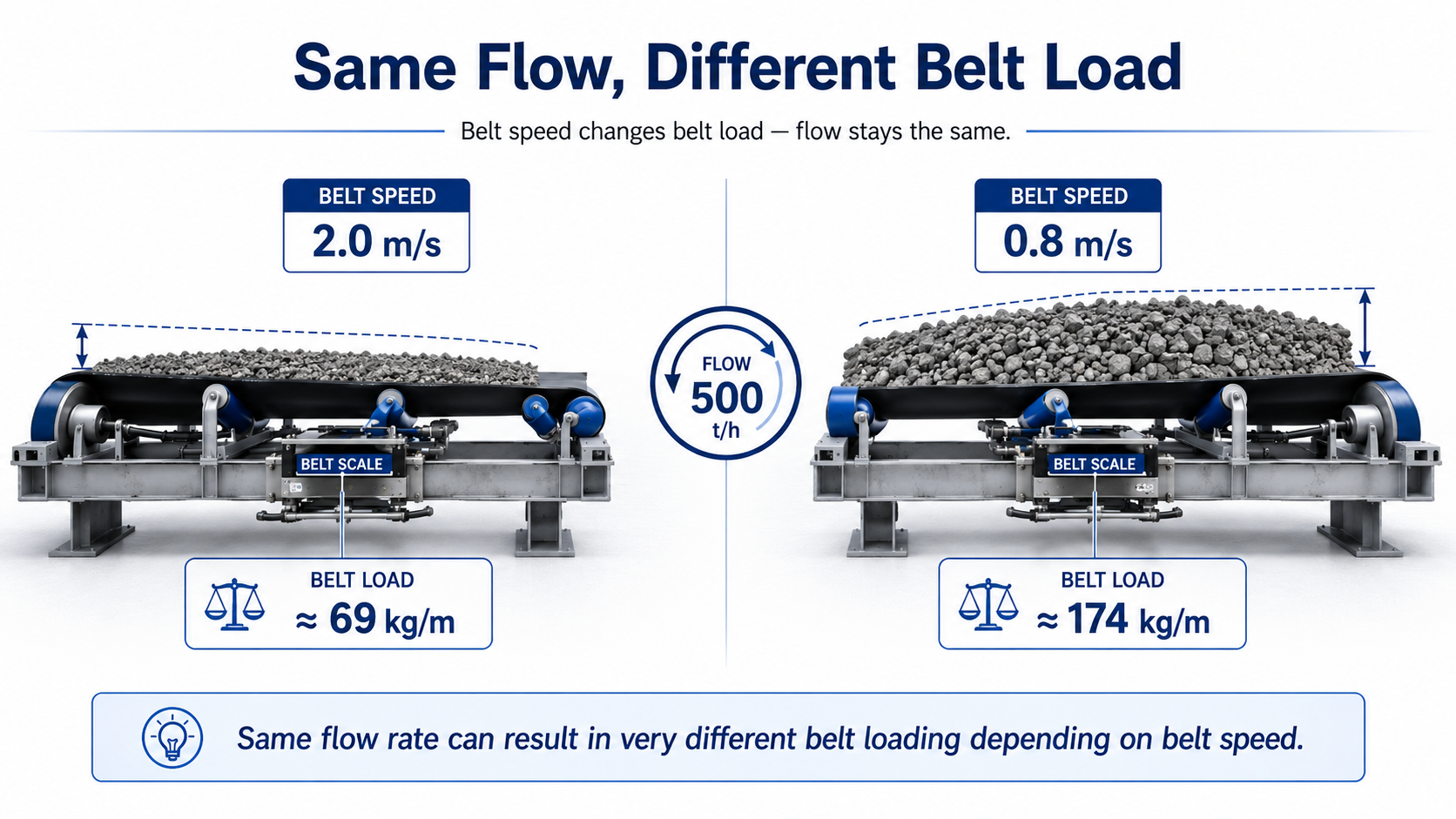
1. The Same 500 t/h Can Mean Very Different Belt Loads
A belt scale calculates flow from two main measurements:
Belt Load × Belt Speed
A simplified relationship is:
Flow (t/h) = Belt Load (kg/m) × Belt Speed (m/s) × 3.6
For the same 500 t/h flow:
- at 2.0 m/s → about 69 kg/m
- at 0.8 m/s → about 174 kg/m
That changes the force signal seen by the weighing system.
So a useful RFQ should include more than maximum flow.
- belt speed
- normal flow
- maximum flow
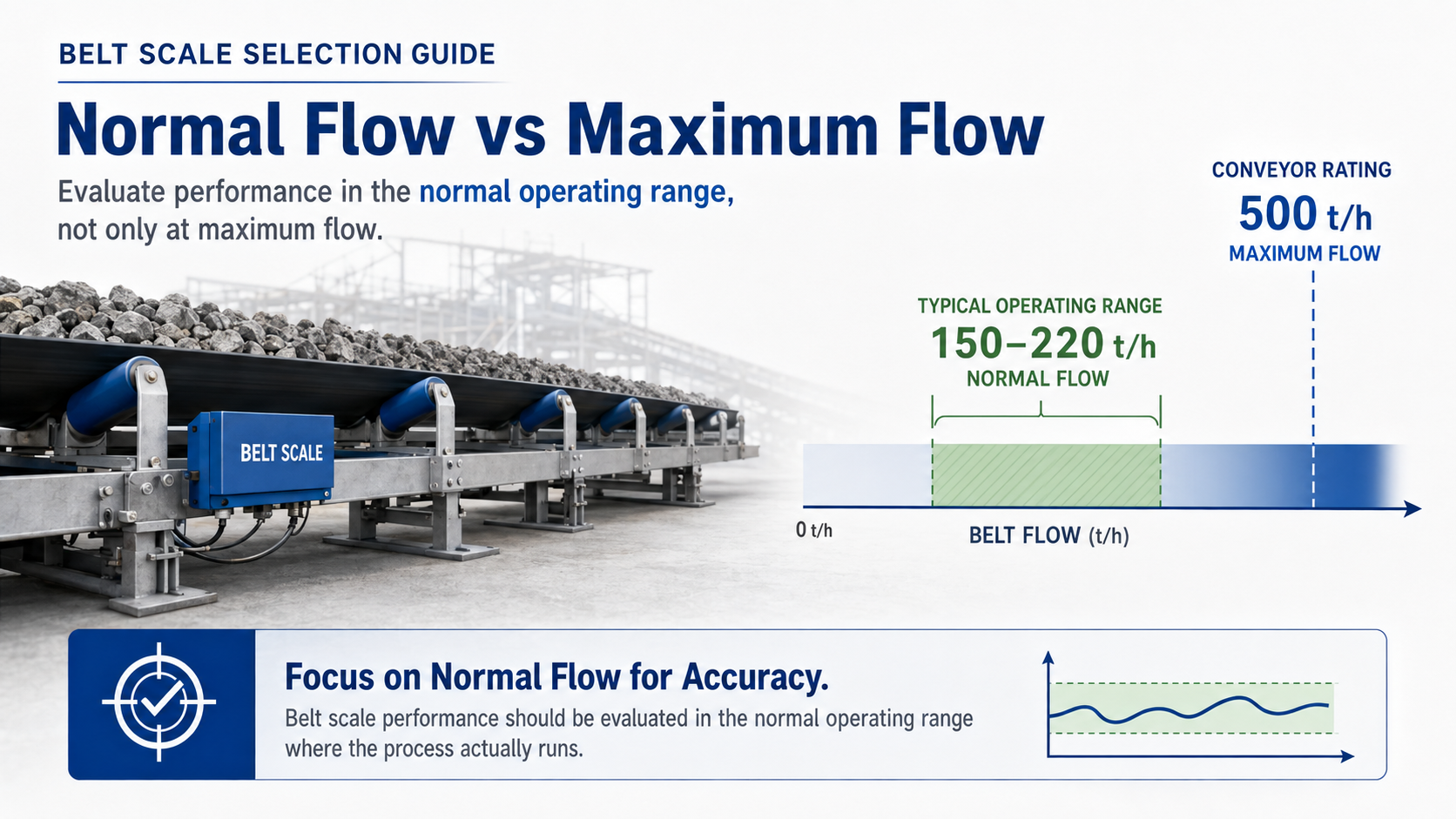
2. Normal Flow Often Matters More Than Maximum Flow
A conveyor may be rated for 500 t/h but normally operate between 150 and 220 t/h.
The belt scale should perform well where the process actually runs most of the time.
At lower belt loading, the useful weighing signal becomes smaller, while influences such as belt tension, vibration and idler variation still remain.
So:
A belt scale designed only around maximum flow may spend most of its working life measuring somewhere else.
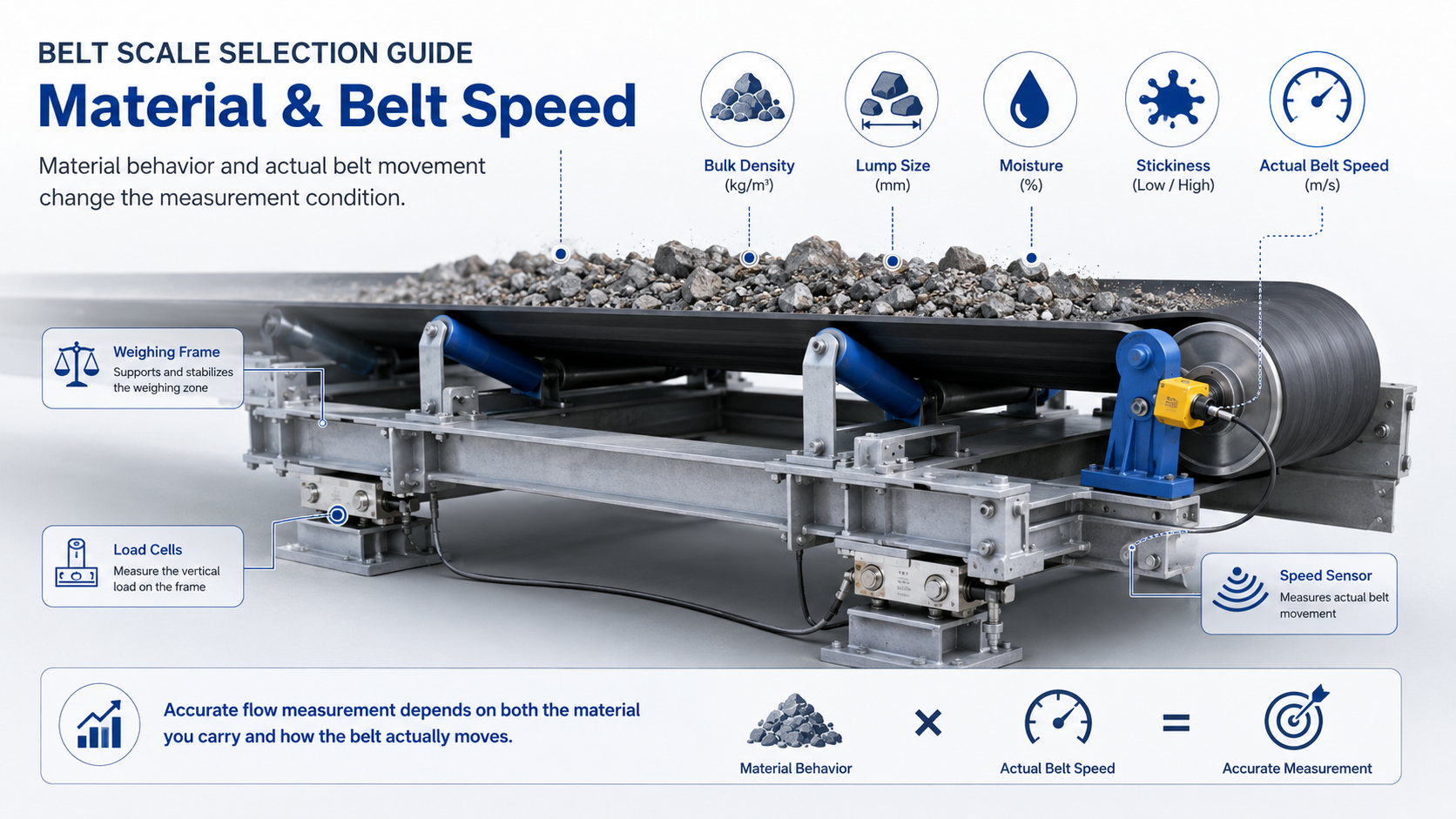
3. Material and Belt Speed Change the Measurement Condition
Knowing only “coal,” “grain” or “stone” is not enough.
Useful material data includes:
- bulk density
- stickiness
- lump size
- moisture
Large lumps can create impact.
Sticky material may build up on the belt or idlers.
Belt speed matters as well because the flow calculation directly uses actual belt movement.
For variable-speed conveyors, the actual belt speed should be measured as accurately as practical rather than simply assuming motor speed equals belt speed.
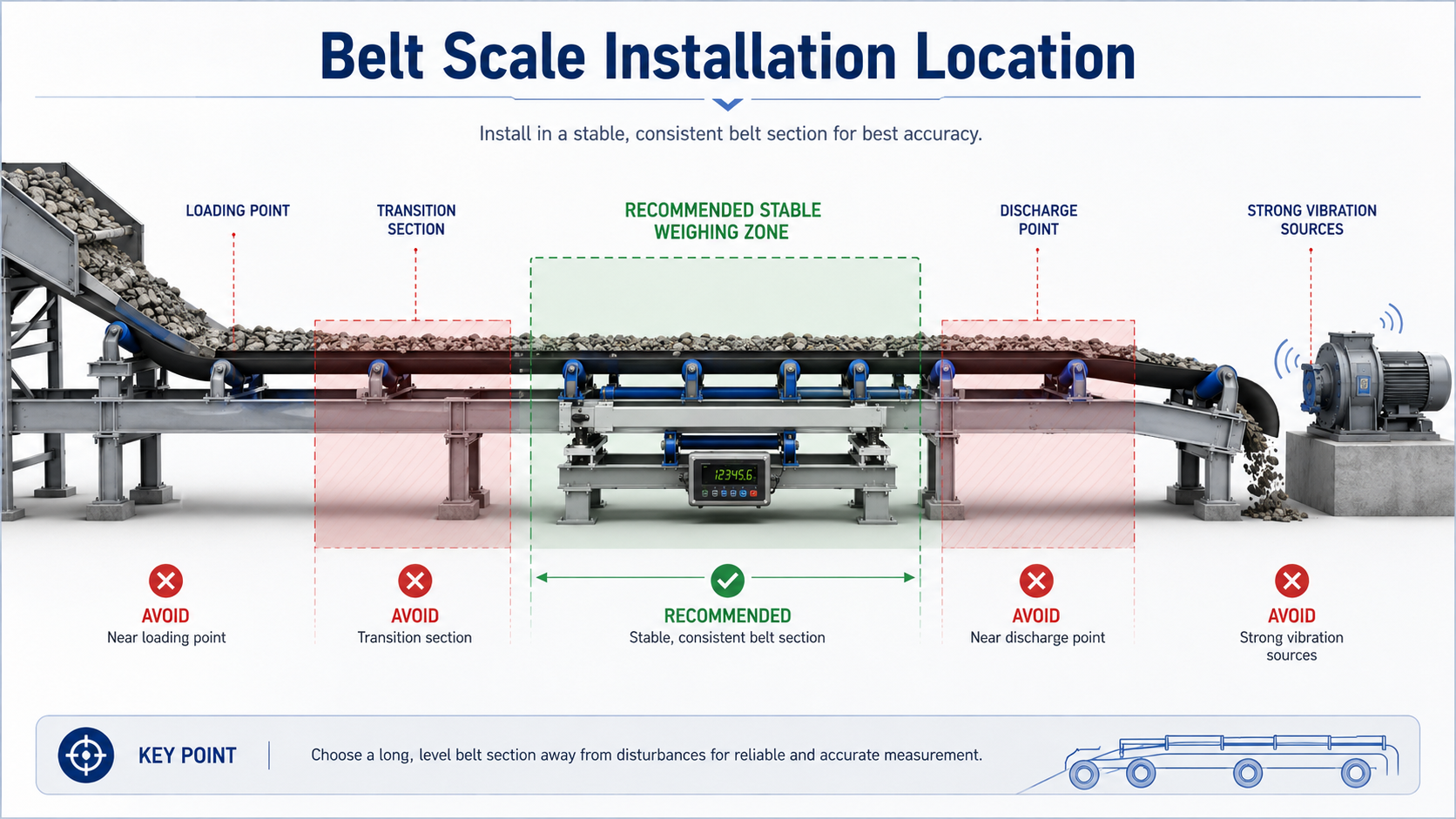
4. Conveyor Condition and Installation Location Can Limit Accuracy
A good belt scale cannot completely compensate for a poor conveyor.
Common influences include:
- poor idler alignment
- belt tracking problems
- unstable belt tension
- vibration
- weak conveyor structure
The weighing section should also be installed where the belt and material are relatively stable.
Avoid placing it too close to:
- loading points
- strong vibration sources
- discharge points
- transition sections
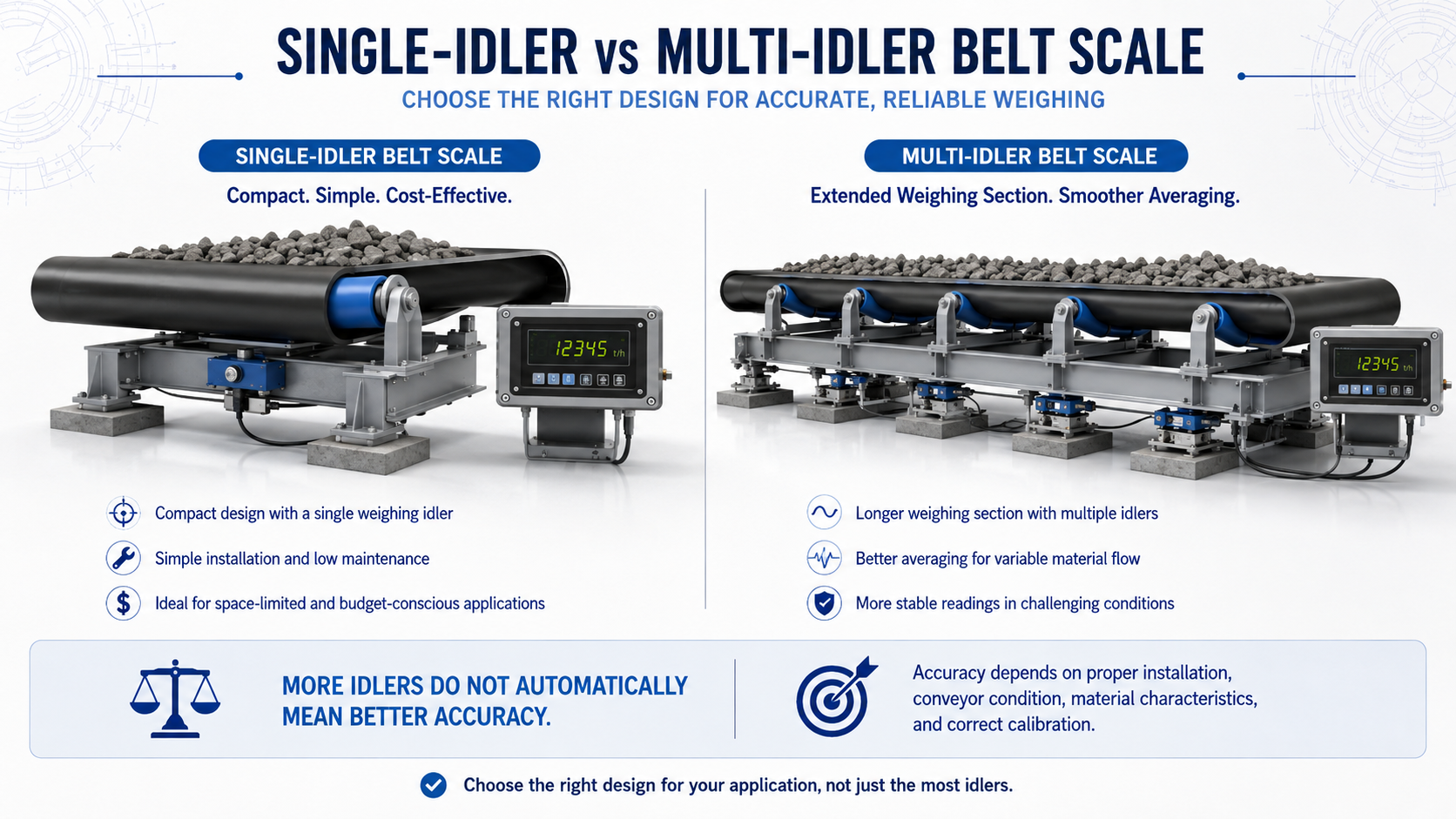
5. Single-Idler or Multi-Idler: More Is Not Automatically Better
A multi-idler belt scale measures over a longer weighing section.
This can help average short-term dynamic variation.
But more weighing idlers do not automatically create higher accuracy.
| Type | Typical Advantage | Consideration |
| Single-idler | Compact, simpler installation | More sensitive to local conveyor conditions |
| Multi-idler | Longer weighing section | Requires better alignment and more installation work |
The final choice should consider required performance, belt speed, conveyor stability and installation conditions together—not simply the number of weighing idlers.
6. Accuracy Must Be Linked to Test Conditions
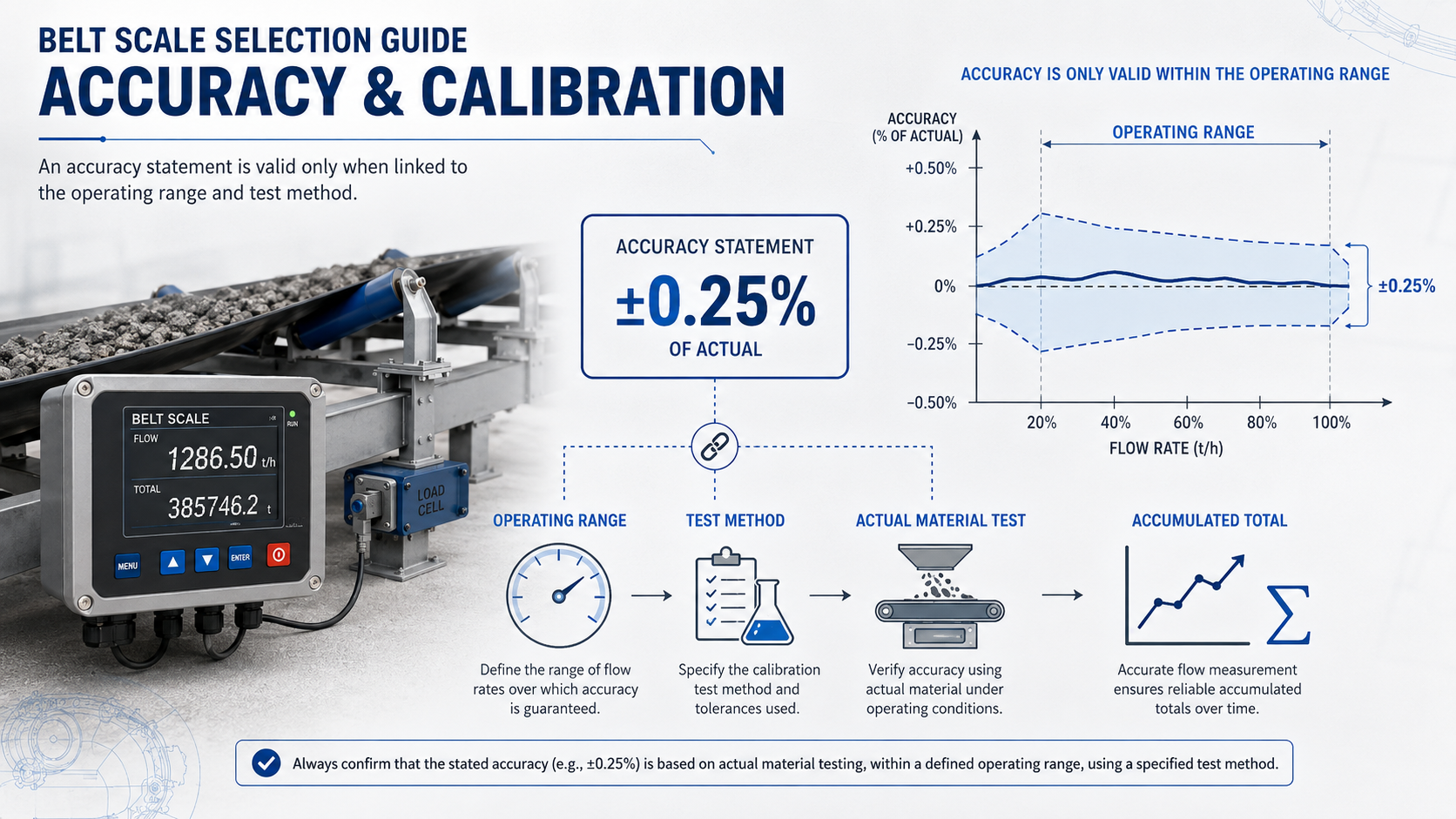
A statement such as:
“Accuracy: ±0.25%”
The next question should be:
Under what operating range and test method?
Because the number may refer to:
- a calibration test
- an actual material test
- accumulated total
- a specific flow range
A static calibration can verify part of the measurement chain, but it does not automatically prove performance under every dynamic operating condition.
When practical, an actual material test is especially useful because it compares the belt-scale accumulated total with an independent reference weight.
The reference measurement itself should also be reliable.
7. What Buyers Often Provide — and What Engineers Also Need
| Buyer Provides | Engineers Also Need |
| Belt width | Belt speed |
| Maximum flow | Normal operating flow |
| Material name | Bulk density + lump size |
| Accuracy target | Test basis + flow range |
| Conveyor length | Proposed installation location |
| PLC required | Protocol + required data |
8. What to Send for a Belt Scale Quotation
A useful belt-scale RFQ does not need to be long.
Try to include:
- belt width
- belt speed
- normal and maximum flow
- material
- bulk density / lump size if available
- conveyor inclination
- application purpose
- PLC / communication requirement
- conveyor drawing or site photos
If some data is unknown, say so.
A capable supplier should identify the missing information rather than quietly make assumptions.
9. From Keli Weighing Technology to KELISCALES Belt Scale Systems
A belt scale is a complete measurement chain:
Material → Weighing Frame → Load Cells + Belt Speed → Integrator → Flow / Total → PLC
Keli’s established weighing capabilities support the sensing and measurement side of this chain.
KELISCALES extends that capability into complete conveyor weighing applications.
The key is not one component alone, but whether the complete chain works under the actual conveyor condition.
10. FAQ
No. Belt speed, normal flow, material properties, conveyor condition and measurement purpose are also important.
Because the belt scale may operate most of its working life below maximum flow. Performance should be considered in the range where the process actually runs.
Not automatically. Final performance still depends on conveyor stability, installation, belt speed and calibration.
It should be linked to a test method, operating range and measurement basis. Without those conditions, the number is incomplete.
11. Before You Buy
Do not stop at:
Belt width?
Maximum flow?
Also confirm:
What is the normal flow?
What is the actual belt speed?
What material is being conveyed?
Where will the scale be installed?
What does the stated accuracy actually refer to?
These details tell you more about expected field performance than belt width, maximum flow and a single “±0.25%” accuracy figure.
A belt scale does not measure a specification sheet. It measures moving material on a real conveyor under real operating conditions.

Need customized model matching your production line, technical drawings and accurate quotation?
Submit your inquiry now, our engineering sales team will send full solution within 24 working hours.