
A request such as:
“100 t truck scale, 18 m × 3 m.”
This is enough to start a quotation, but not enough to select the right system.
A better truck-scale project starts with three questions:
What vehicles will use it?
How often will they use it?
What will the weight data be used for?
These answers can change the structure, platform length, load-cell arrangement, software and compliance requirements.
1. Capacity Is Only the First Number
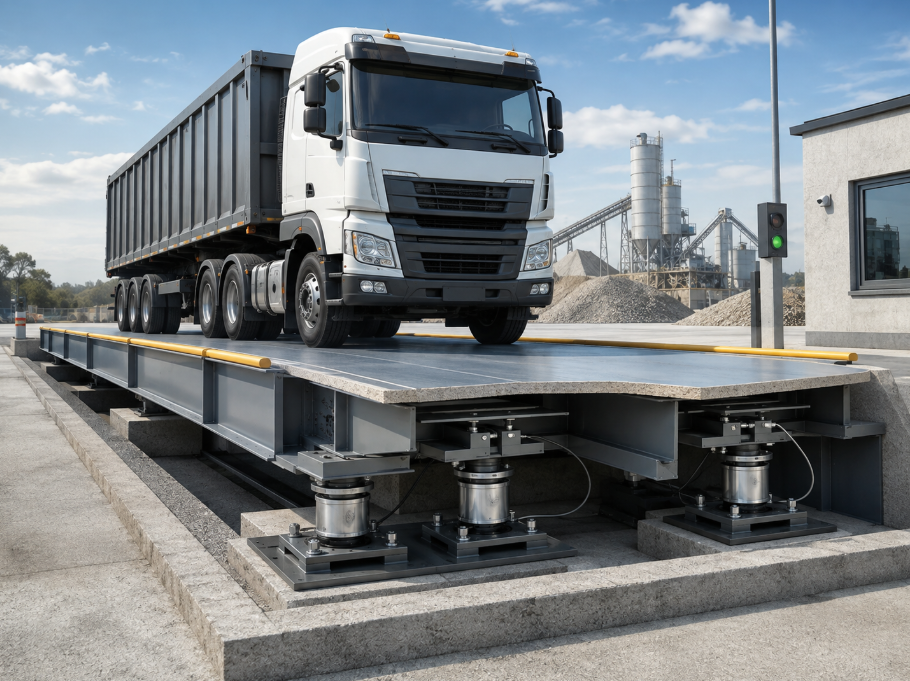
A 100-ton truck does not place 100 tons evenly across the weighing platform.
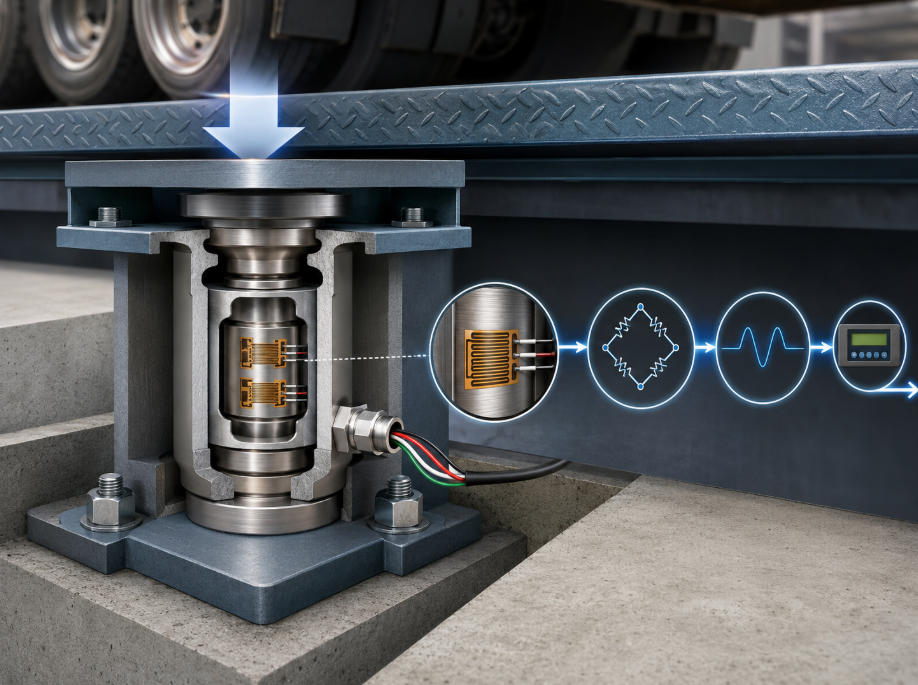
The load enters through the tires and axles:
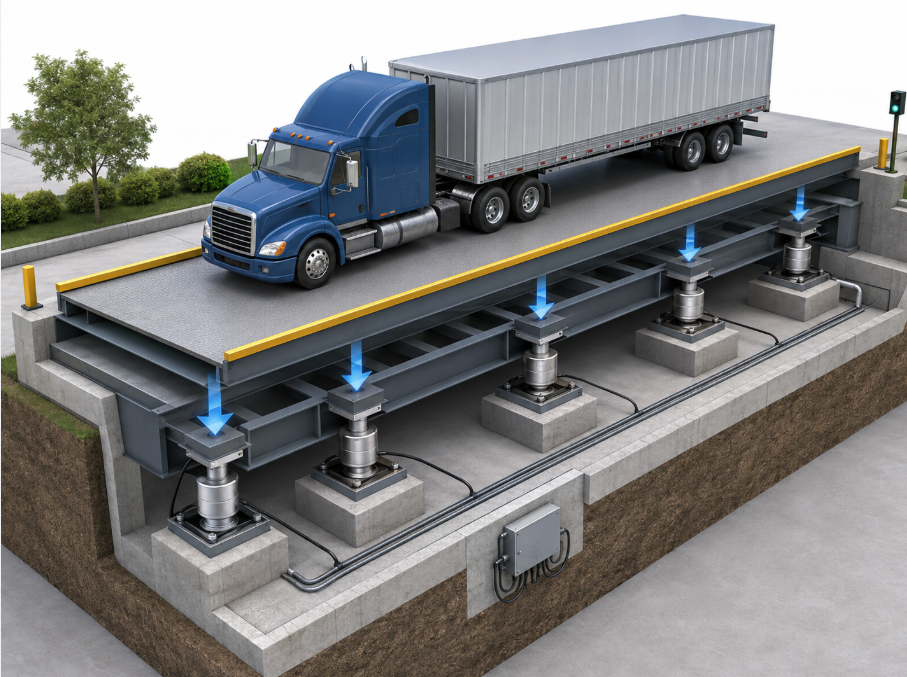
Tire → Axle → Deck → Main Structure → Support Point → Load Cell
Two vehicles with the same gross weight can create different local loads because their axle arrangement and axle spacing are different.
So a better question than:
“Is this a 100 t scale?”
“What axle-load condition was this structure designed for?”
This usually tells you more than steel thickness alone.
2. Daily Traffic Changes the Structural Requirement
A 100-ton scale handling 30 trucks per day and another handling 500 trucks per day do not have the same long-term working condition.
Repeated loading affects structural fatigue, welds, deck deformation and support points.
So the supplier should know:
- trucks per day
- operating hours
- whether vehicles often brake or accelerate on the platform
“Trucks per day” is not only an operating detail.
It is also a structural design input.
3. Platform Length Should Match the Vehicle
A 100-ton capacity does not automatically mean an 18 m or 20 m platform.
For full-vehicle static weighing, all relevant axles need to fit on the effective weighing platform.
Useful information includes:
- longest vehicle
- wheelbase
- axle-group positions
- vehicle type
An unnecessarily long scale increases steel, foundation and freight costs.
A scale that is too short can create a much bigger operational problem.
For export projects, a vehicle drawing or site photo is often more useful than writing “standard truck.”
4. Steel Thickness Is Not the Whole Structure
Truck-scale quotations are often compared using:
capacity + size + steel thickness + price
The deck works together with:
- main beams
- module connections
- cross members
- support points
- welds
A more useful comparison is:
axle load + structural layout + support design + duty cycle
rather than steel thickness alone.
5. Foundation and Load Cells Must Be Considered Together
The foundation does not produce a weight signal, but it controls how the scale is supported.
Problems such as:
- uneven settlement
- poor mounting surfaces
- water accumulation
- contact between the deck and surrounding concrete
can affect weighing performance.
This is why:
A good truck scale on a poor foundation can still perform badly.
The same principle applies to load-cell quantity.
More load cells do not automatically mean better accuracy.
The important factors are:
load distribution + installation + sensor consistency + calibration
6. Analog or Digital: Think About Maintenance
Both analog and digital load cells can work well in truck-scale applications.
Analog systems are mature and widely serviceable.
Digital systems can make individual sensor data and fault diagnosis easier in suitable architectures.
The practical question is not:
“Which one is more advanced?”
“Who will troubleshoot this scale five years from now?”
Also consider:
- local service capability
- downtime requirements
- spare parts
- diagnostic tools
7. Calibration Should Check More Than One Position
A known test load may give the correct reading in the center of the platform.
But a long truck scale has multiple support points.
When the load moves to another section, the load distribution among sensors changes.
So commissioning should also check whether the scale behaves consistently at different relevant positions.
This can reveal:
- support-point differences
- mechanical interference
- load-cell adjustment problems
- foundation issues
8. Unattended Weighing: Design the Exceptions
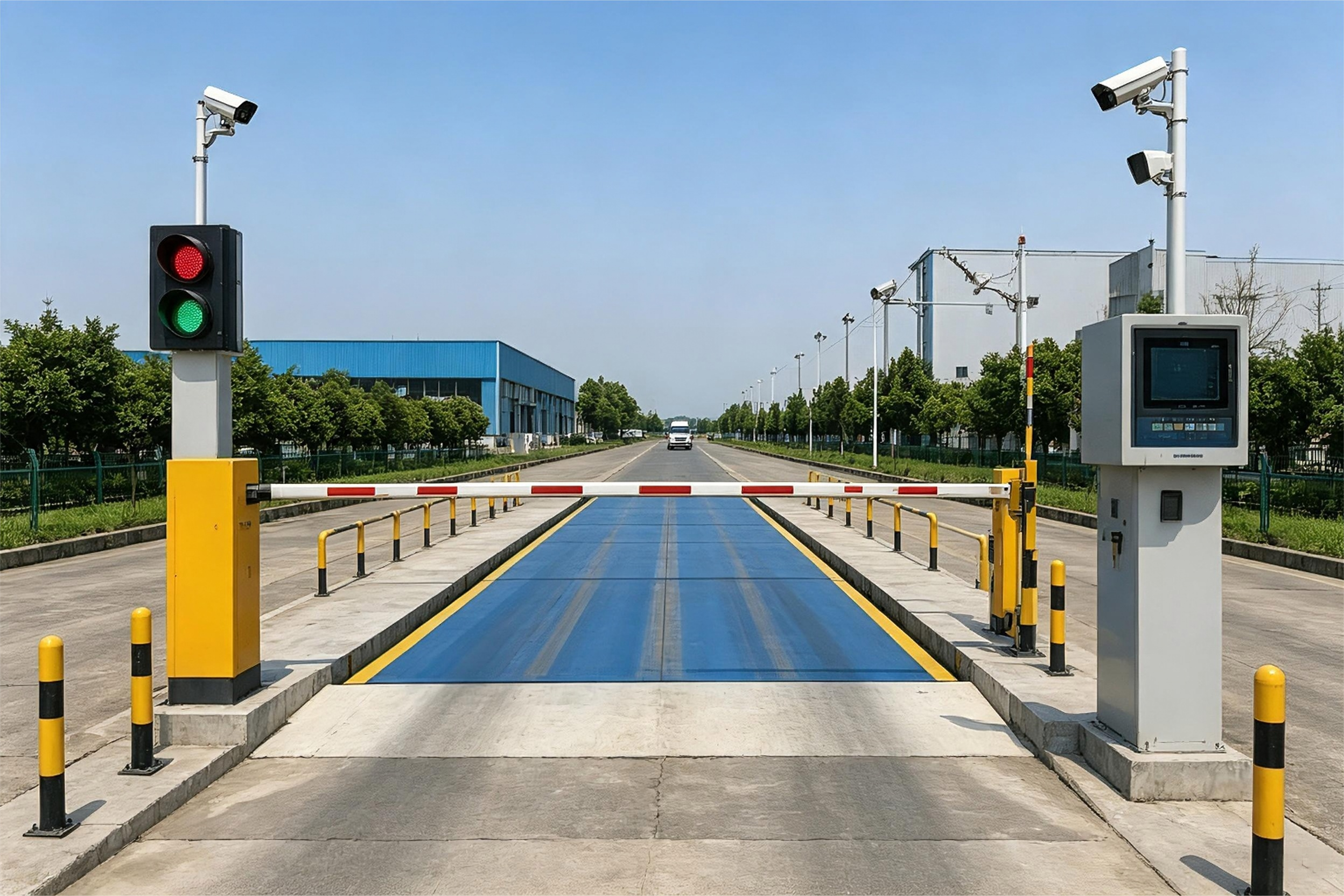
A normal automated workflow is simple:
Vehicle ID → Barrier → Weighing → Camera → Record → Exit
But the difficult questions are:
- What if the plate cannot be recognized?
- What if the truck is not fully on the platform?
- What if the network fails?
- Can an operator intervene manually?
- Is that intervention recorded?
A good unattended system is not simply cameras plus barriers.
It should handle both normal and abnormal transactions.
9. What Should Be Included in a Truck Scale RFQ?
A useful RFQ does not need to be long.
It needs the information that changes the design.
| Information | Why It Matters |
| Destination country | Compliance requirements |
| Maximum vehicle weight | Basic capacity |
| Vehicle / axle information | Structural loading |
| Longest vehicle | Platform length |
| Trucks per day | Duty cycle |
| Pit or pitless | Foundation and site layout |
| Rain / mud / temperature | Protection and maintenance |
| Trade or internal use | Compliance |
| Analog or digital | Service architecture |
| Software / automation | Data workflow |
| Site photos / drawings | Installation constraints |
A capable supplier should identify missing information rather than quietly make assumptions.
10. What Buyers Often Compare — and What Matters More?
| Buyers Often Compare | Also Check |
| 100 t vs 120 t | Maximum vehicle + axle load |
| 10 mm vs 12 mm plate | Complete structural layout |
| 18 m vs 20 m | Longest vehicle + axle position |
| 8 vs 10 load cells | Support layout + calibration |
| Analog vs digital | Serviceability + diagnostics |
| Lowest price | Foundation + installation + lifecycle |
| OIML / CE logo | Exact model and certificate scope |
11. From Keli Technology to KELISCALES Truck Scale Systems
Keli’s established strengths are mainly in load cells, weighing electronics and measurement technology.
KELISCALES extends those capabilities into complete truck-scale applications:
weighbridge structure → load-cell integration → indicator → calibration → software
The important point is not simply which sensor brand is installed.
It is whether the mechanical structure and measurement system are designed to work together.
12. FAQ
No. Axle load, beam design, support layout and operating frequency also affect structural performance.
The platform should fit the actual vehicles. Longest vehicle length and axle positions are more useful than capacity alone.
Not automatically. Load distribution, installation and calibration matter more than sensor quantity alone.
Consider diagnostics, local service capability, spare parts and long-term maintenance.
13. Before You Place the Order
A truck scale may be purchased once and used tens or hundreds of thousands of times.
So do not stop at:
How many tons?
How thick is the steel?
Also ask:
What axle loads will it see?
How often will it be used?
Does the platform fit the longest vehicle?
Is the foundation suitable?
How will it be calibrated and maintained?
Those answers usually tell you much more about a truck scale than capacity, steel thickness and price alone.
The goal is not to buy the biggest specification. It is to remove the wrong assumptions before the scale is built.

Need customized model matching your production line, technical drawings and accurate quotation?
Submit your inquiry now, our engineering sales team will send full solution within 24 working hours.