
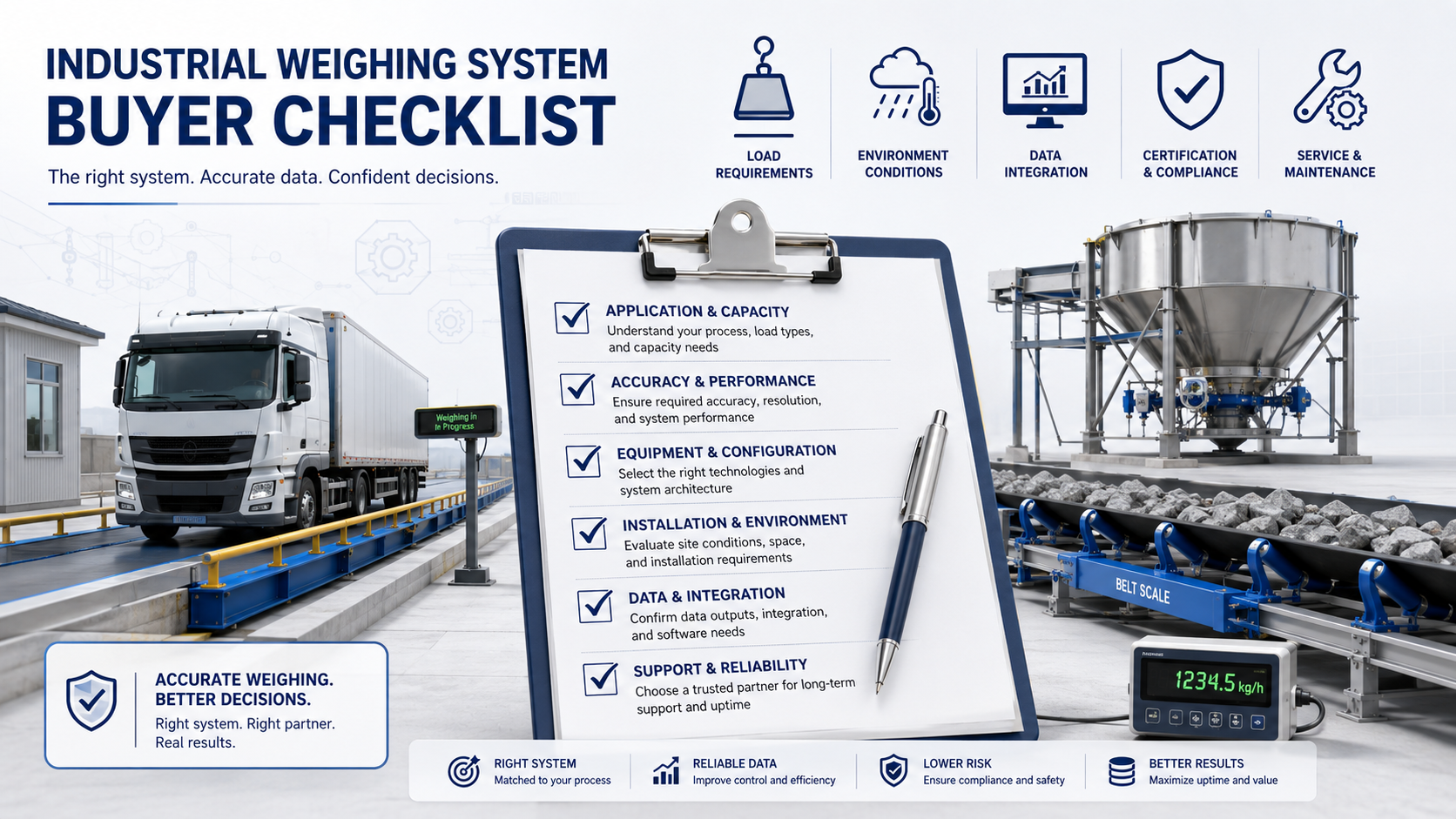
A request such as “100-ton truck scale,” “1,000 mm belt scale,” or “5-ton hopper scale” sounds specific.
For an engineer, it usually is not.
A 100-ton weighbridge handling 40 trucks a day is not the same project as one handling 500. A 1,000 mm conveyor carrying grain at 0.8 m/s is also very different from one carrying crushed stone at 3 m/s.
The product name tells the supplier which category to look at.
The operating conditions determine what should actually be supplied.
1. Start With the Weight Data You Need
The first useful question is not:
“What type of scale do we need?”
It is:
“What decision will be made from this weight?”
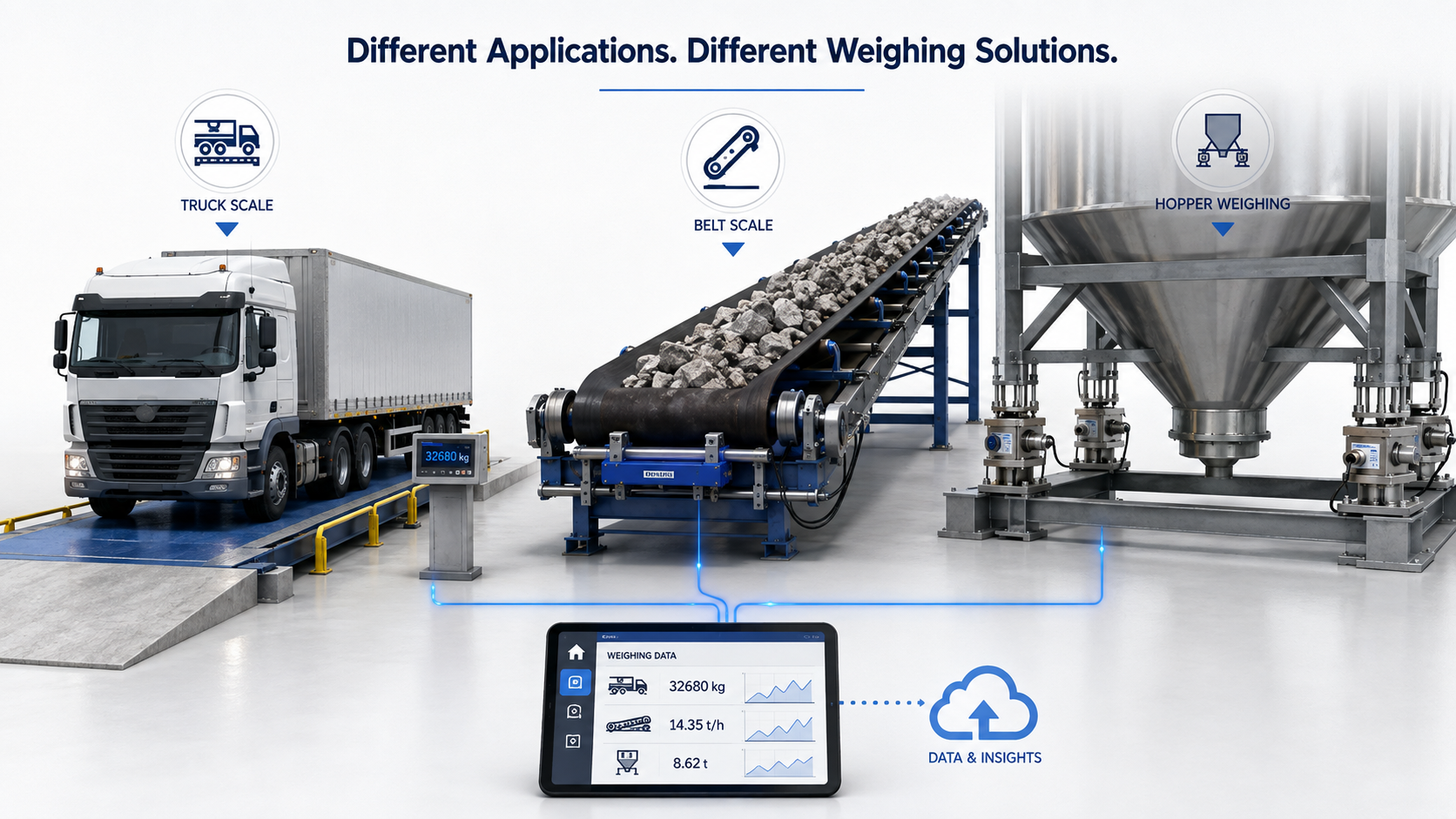
A truck scale may calculate the net weight of material entering or leaving a plant.
A belt scale may monitor production flow or accumulated tonnage.
A hopper system may stop filling at a target batch weight and trigger discharge.
These are three different measurement tasks, not simply three different machines.
A useful rule is:
Define the measurement function before selecting the hardware.
2. Truck Scale: Capacity Alone Is Not Enough
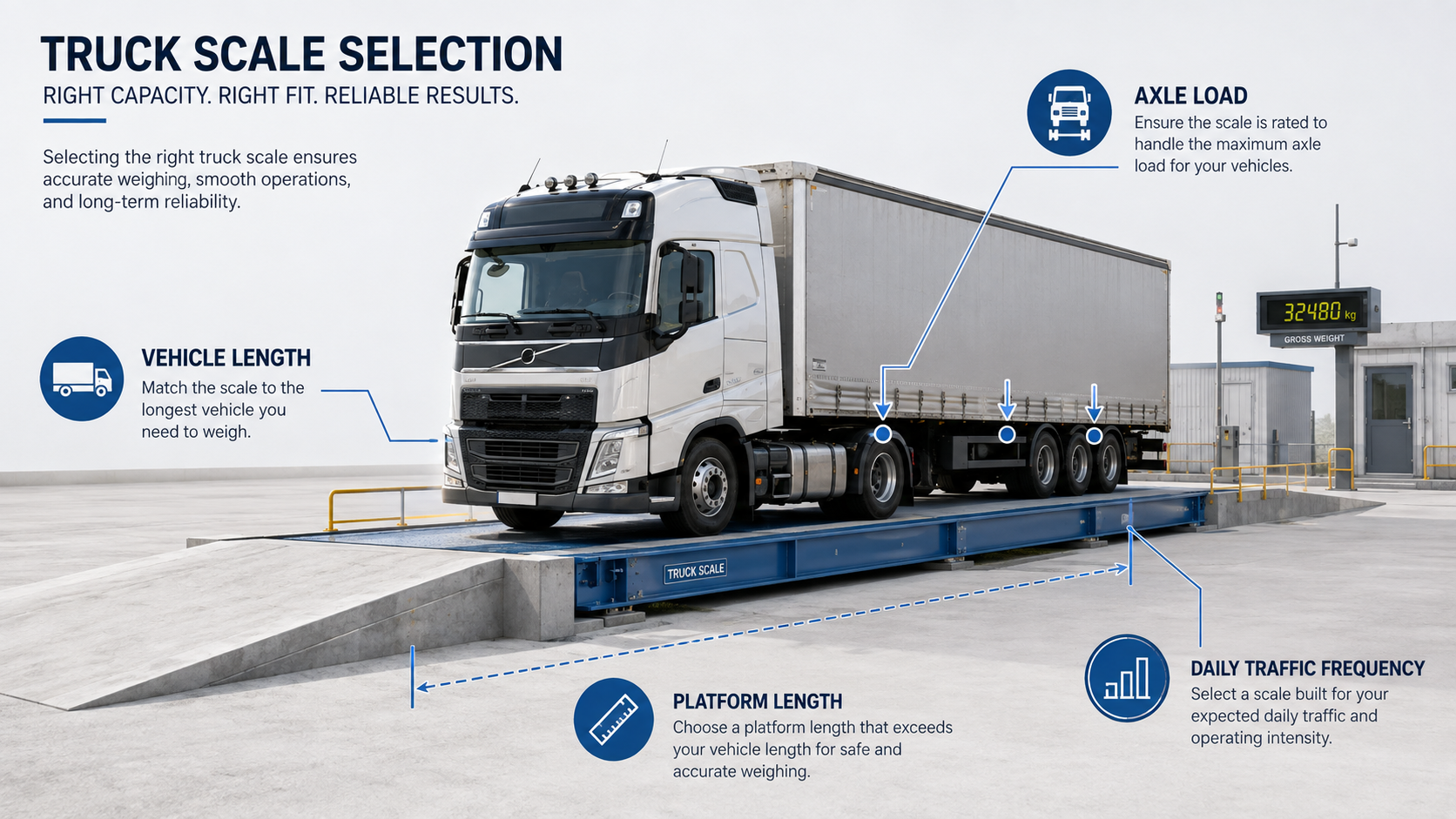
For a truck scale, maximum vehicle weight is only one input.
The supplier should also understand:
- vehicle type
- axle arrangement and typical axle load
- longest vehicle
- trucks per day
- platform size
- pit or pitless installation
- site environment
Why does axle load matter?
Because a 100-ton truck does not distribute 100 tons evenly across the whole platform.
Loads enter through individual tires and axles. The deck and beams have to transfer those concentrated loads to the load-cell positions.
So comparing truck scales only by:
100 t + 18 m + 12 mm deck plate
A more useful comparison is:
axle load + structural design + duty cycle + load-cell arrangement
Platform length should also match the actual vehicles, not simply the nominal capacity.
For export projects, vehicle dimensions and a few site photos often prevent a wrong platform configuration from being quoted.
3. Hopper Weighing: Do Not Simply Divide the Weight by the Number of Load Cells
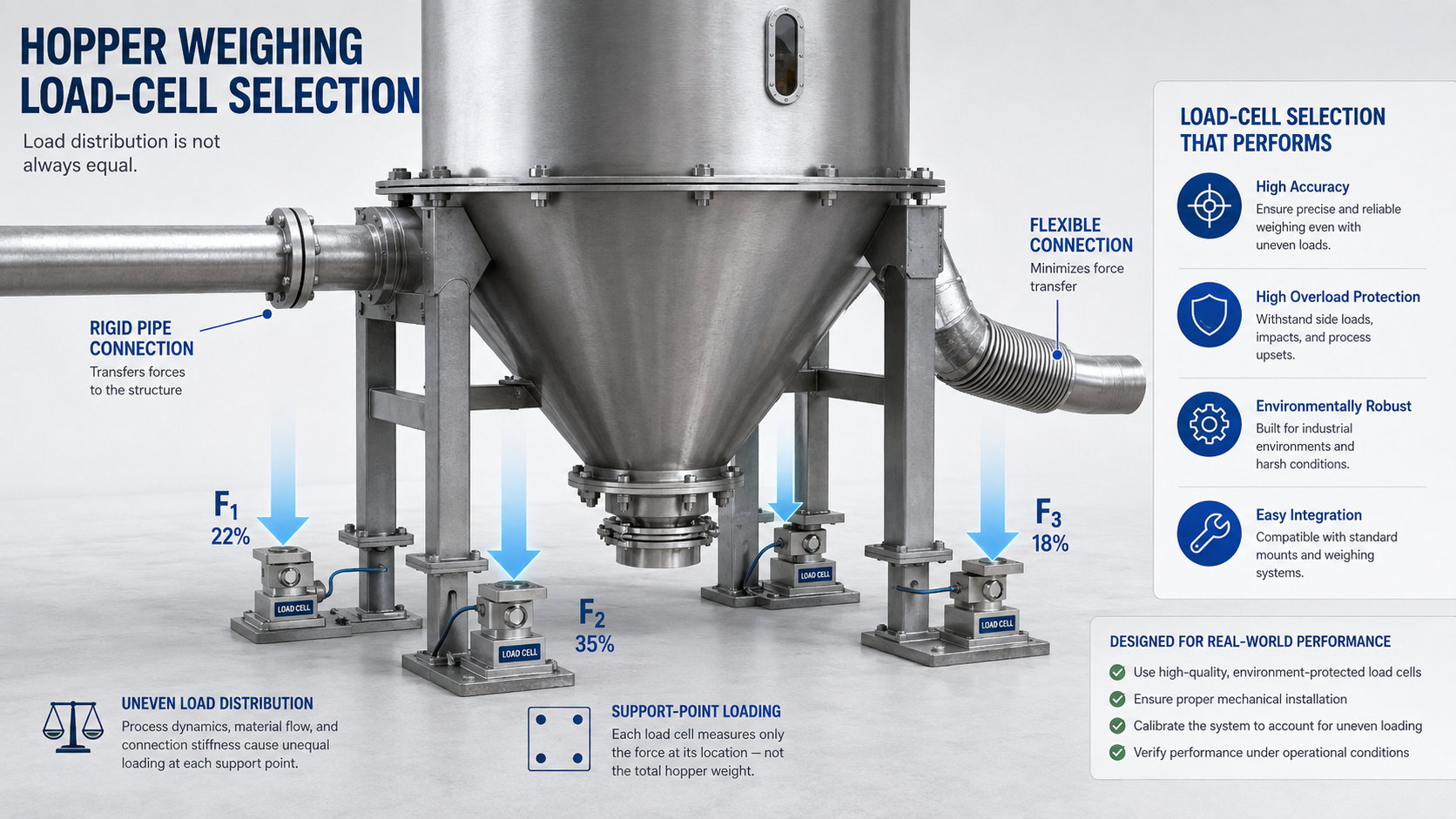
Suppose a hopper has four support points.
A common shortcut is:
total weight ÷ 4 = load on each sensor
Real systems are rarely that perfectly balanced.
One support point may carry more because of:
- off-center filling
- hopper geometry
- manufacturing tolerance
- piping forces
- material accumulation
- dynamic impact
The sensor should therefore be selected for the worst realistic load at one support point, not only the mathematical average.
But oversizing the sensor too much is not ideal either.
Excessive oversizing can reduce the useful signal range during normal operation.
The goal is:
enough capacity for real loading, without unnecessary oversizing.
4. What Is Connected to the Hopper?
A hopper can use good load cells and still weigh poorly.
The cause may be a rigid inlet pipe, outlet pipe, dust duct, feeder or nearby vibration.
These forces can bypass or disturb the intended load path.
For hopper projects, one of the most useful questions is therefore:
What is mechanically connected to the weighing vessel?
A piping drawing can sometimes be more useful than another page of sensor specifications.
5. Belt Scale: Belt Width Is Only the Starting Point
A request saying:
“Belt scale for 800 mm conveyor”
is not enough.
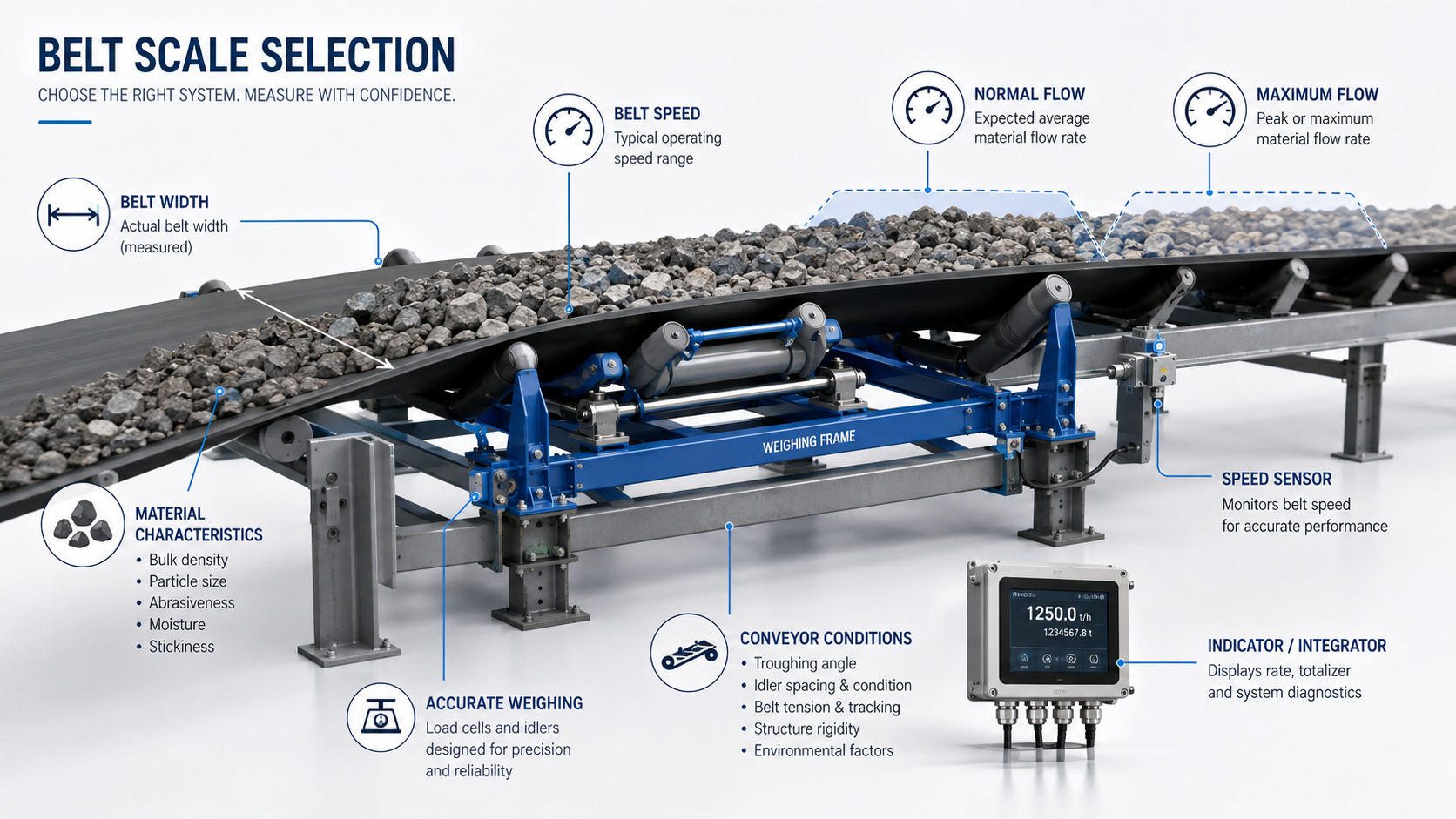
A useful quotation normally needs:
- belt width
- belt speed
- normal flow
- maximum flow
- material type
- bulk density if available
- lump size
- conveyor inclination
- measurement purpose
Material behavior matters because grain, coal, aggregates and large mineral lumps do not load the weighing section in the same way.
6. Normal Flow Can Matter More Than Maximum Flow
A buyer may specify:
Maximum flow: 1,000 t/h
But if the conveyor normally operates between 150 and 300 t/h, that range may matter more for actual measurement performance.
A good RFQ should therefore include both:
maximum flow
normal operating flow
7. “High Accuracy” Is Not a Complete Requirement
“High accuracy required” appears in many RFQs.
“High accuracy required.”
That does not tell an engineer enough.
A better question is:
What size of error would actually affect the process or transaction?
For a batch system, the important requirement may be the allowable error in a 2,000 kg batch.
For a belt scale, accumulated tonnage over a shift may matter more than one instantaneous reading.
And for a legal-for-trade truck scale, local metrology requirements may define the accuracy framework.
This is also why:
load-cell accuracy ≠ complete system accuracy
Mechanical installation, calibration, signal processing and operating conditions also matter.
8. Stable Readings Do Not Always Mean Correct Readings
Suppose the same test load is weighed five times:
10,120 kg
10,121 kg
10,120 kg
10,119 kg
10,120 kg
The readings are highly repeatable.
But if the true weight is 10,000 kg, the system is still wrong.
This is the difference between repeatability and accuracy.
A stable display alone does not prove correct calibration.
9. Describe the Real Environment
“Indoor” or “outdoor” is only a starting point.
A better description is:
Outdoor truck scale, tropical rain season, 350 trucks per day, frequent mud contamination, unattended operation required.
That one sentence can influence:
- structural design
- drainage
- cable protection
- electronics
- lightning protection
- maintenance access
For belt and hopper systems, dust, vibration, washdown, corrosion and temperature should also be stated where relevant.
10. Decide the Data Interface Before Shipping
Many modern weighing projects have more integration problems than weighing problems.
A project may start with only a weighing indicator.
Later, the customer asks for:
- PLC communication
- Modbus
- Ethernet
- ERP or MES integration
- vehicle identification
- camera records
- automatic barriers
- remote reporting
By then, the hardware may already have been selected.
So before ordering, define:
What data is needed?
Which system receives it?
What happens if the network is temporarily unavailable?
For unattended truck scales, this last point is particularly useful.
11. Maintenance Should Be Considered Before Purchase
A system can work perfectly during commissioning and still be difficult to own.
Useful questions include:
- Can a failed load cell be replaced easily?
- Can technicians reach the junction box?
- Are cables protected and serviceable?
- Can the system be recalibrated on site?
- Are compatible indicators and spare parts available?
For equipment expected to operate for many years, these questions can matter more than a small difference in initial price.
12. Ask What Is Included for Installation and Commissioning
For overseas projects, factory testing is only part of the job.
After delivery, actual foundations, conveyor alignment, hopper piping and field wiring can change system behavior.
Before ordering, ask whether the supplier provides:
- installation drawings
- foundation drawings
- electrical drawings
- wiring diagrams
- calibration procedure
- commissioning instructions
- recommended spare parts
13. Certification Should Match the Final Application
OIML, NTEP, CE, ATEX and IECEx can all be important.
But the application must be defined first.
A U.S. legal-for-trade truck scale, an internal production scale and a hopper installed in a hazardous dust area have different compliance questions.
The useful sequence is:
Application → Equipment configuration → Destination market → Applicable compliance
Certificates should be checked against the exact quoted models before manufacturing begins.
14. What Should a Good RFQ Include?
A good RFQ does not need to be long.
It needs to contain the information that changes the engineering decision.
Provide:
- destination country
- maximum vehicle weight
- vehicle type and axle information
- longest vehicle
- trucks per day
- platform size
- pit or pitless installation
- legal-for-trade or internal use
- software / unattended requirements
- site photos
Provide:
- belt width
- belt speed
- normal and maximum flow
- material
- bulk density and lump size if available
- conveyor inclination
- measurement purpose
- conveyor drawings or photos
Provide:
- hopper dead weight
- maximum material weight
- support points
- batch size
- filling and discharge method
- connected piping
- vibration conditions
- control requirements
If some information is unknown, say so.
A capable supplier should help identify missing engineering information rather than quietly inventing assumptions.
15. Where Keli and KELISCALES Fit?
Keli’s established strengths are mainly at the sensing and measurement layer:
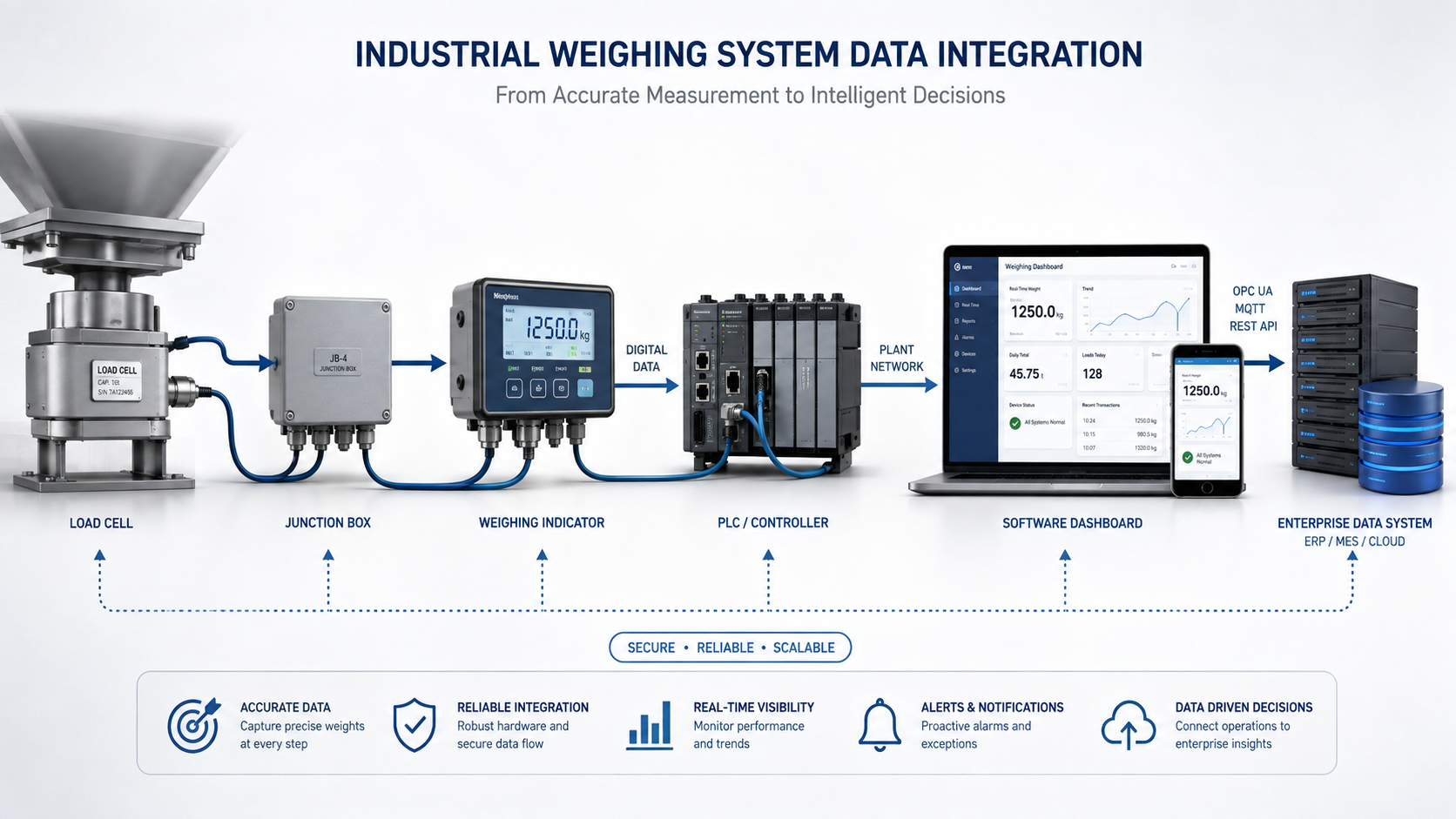
load cells → weighing electronics → signal measurement
KELISCALES works further downstream:
mechanical equipment → system integration → industrial application
A complete weighing system sits between both.
The useful question is therefore not whether a supplier has many scale models.
It is whether the supplier understands the whole measurement chain:
mechanical load → load cell → electronics → data → final application
16. FAQ
The actual application, normal and maximum load, operating conditions, environment, destination country and required data output.
No. It must safely cover the real load, but excessive oversizing may reduce useful measurement performance.
Because the conveyor may spend most of its operating time far below maximum flow. The useful operating range matters to real measurement performance.
No. Mechanical installation, load path, calibration, signal processing and site conditions all affect final performance.

Need customized model matching your production line, technical drawings and accurate quotation?
Submit your inquiry now, our engineering sales team will send full solution within 24 working hours.