
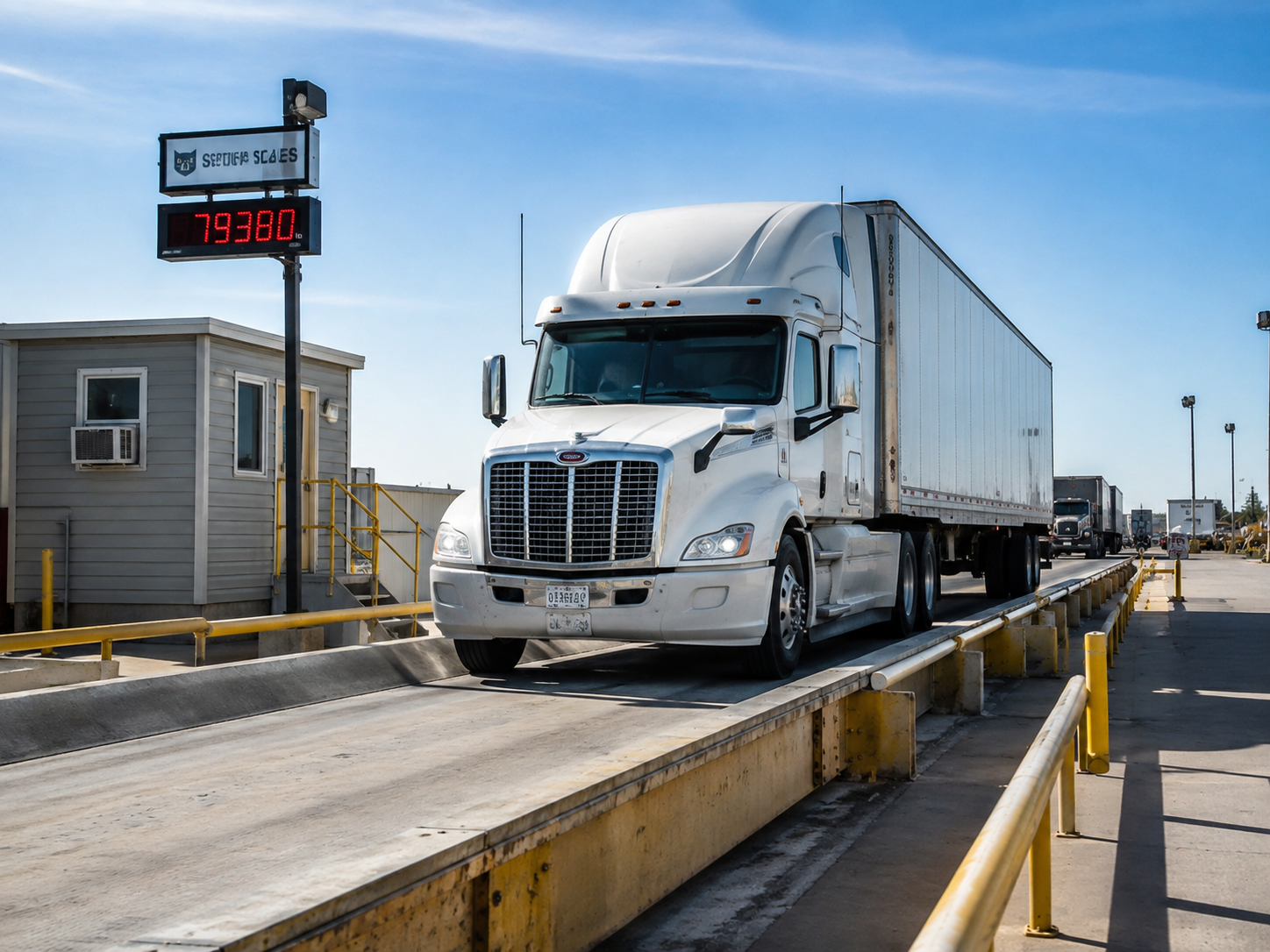
A fully loaded truck may weigh 40 tons, 60 tons, or even more than 100 tons, yet a modern truck scale can convert such enormous mechanical force into an accurate digital weight reading within just a few seconds.
So, how does a truck scale actually work?
A truck scale, also known as a Truck Scale or Weighbridge, works on a basic principle: the weight of the vehicle is first applied to a large weighing deck and then transferred through the deck to multiple load cells. The load cells convert mechanical force into electrical signals, which are then processed by a weighing indicator and related electronic equipment before being displayed as readable weight data.
The basic working process of a modern truck weighing system can be summarized as:
Truck → Weighing Deck → Load Cells → Junction Box → Weighing Indicator → Weighing Software
Understanding this process also helps explain why truck scale accuracy depends on much more than the steel weighing deck itself.

What Is a Truck Scale?
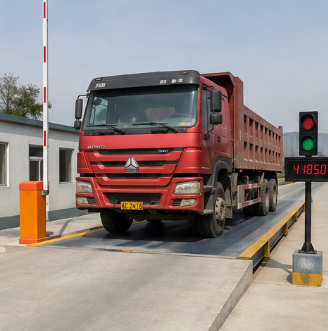
A truck scale, or weighbridge, is a large industrial weighing system designed to measure the weight of an entire vehicle together with its load.
Truck scales are widely used in mines and quarries, grain processing and storage facilities, cement plants, steel mills, recycling facilities, ports and logistics centers, manufacturing plants, warehouses, and distribution centers. In actual operations, a truck scale normally determines gross weight and tare weight through two separate weighings and then calculates the net weight using the formula “Net Weight = Gross Weight − Tare Weight.” This makes it possible to determine the actual amount of material loaded onto or unloaded from the truck.
How Does a Truck Scale Measure Vehicle Weight?
When a truck drives completely onto the truck scale, the vehicle’s weight is transferred through the deck structure to multiple load-bearing points underneath.
These load-bearing points are equipped with load cells. Each load cell measures a portion of the truck’s total weight. The system collects the electrical signals generated by all of the load cells and then combines, compensates, and processes them to calculate the total vehicle weight. The weighing indicator then converts the processed signal into a numerical value that the operator can read directly, for example:
If the gross weight is 58,420 kg, in a highly automated facility this weight data can be transmitted directly to weighing management software, ERP systems, logistics management platforms, unattended weighing systems, and industrial control systems. This shows that modern truck scales are no longer simply weighing devices; they have also become important data collection points for production and logistics management
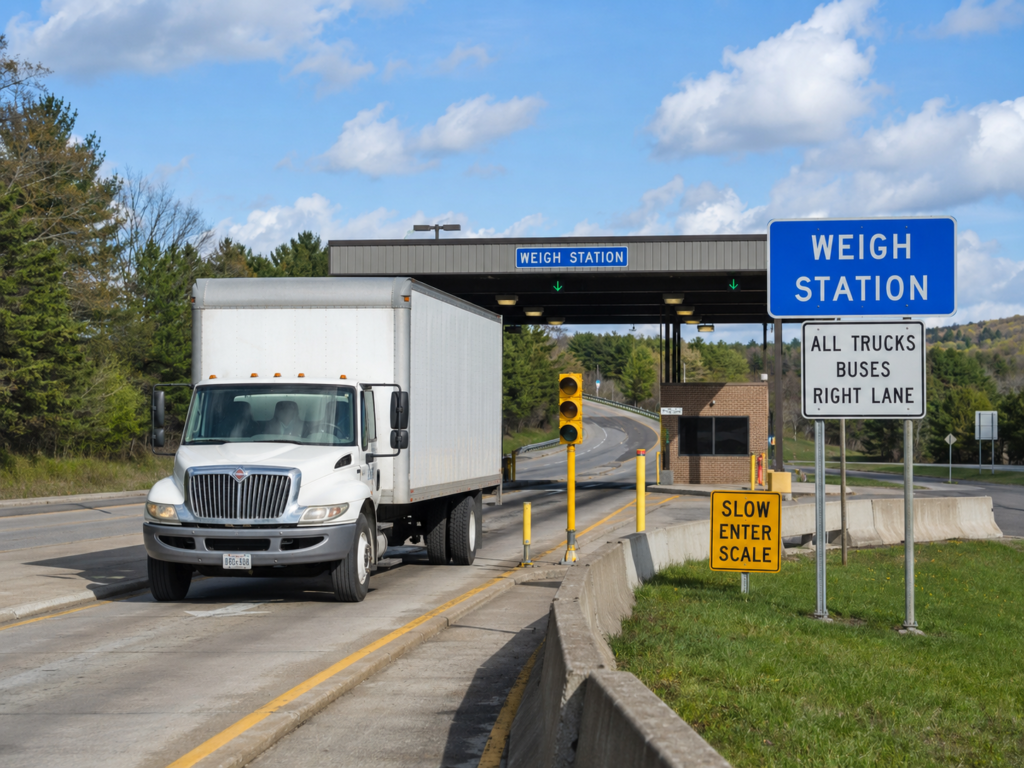
Main Components of a Truck Scale
Weighing Deck
The weighing deck is the large load-bearing platform where the truck stops for weighing.
Depending on the project requirements, a truck scale can use a steel or reinforced-concrete weighing deck and can be designed as an above-ground, shallow-pit, or full-pit installation. The main purpose of the deck is to transfer the heavy vehicle load smoothly to the load cells. It must withstand heavy vehicle loads, impact, vibration, repeated traffic, corrosion, and temperature changes over long periods. For this reason, a well-designed mechanical structure is an important foundation for the long-term stable operation of a truck scale.
Load Cells
Load cells are among the most important measuring components in a truck scale.
They are typically installed beneath the weighing deck and convert the mechanical force generated by the vehicle into electrical signals that can be measured and processed. A truck scale normally does not use only one load cell. Instead, multiple load cells are selected according to the deck length, structural design, and rated weighing capacity.
This allows the system to measure the load applied to different areas of the weighing deck and calculate the total vehicle weight.
Junction Box
In a traditional analog truck scale system, the output signals from multiple load cells are usually connected to a junction box.
The junction box collects and adjusts the signals from the different load cells before transmitting them to the weighing indicator. Although the junction box may appear to be only a small component, its condition can directly affect the stability of the truck scale. Water ingress, aging cables, loose connections, corrosion, and electrical interference can all cause weight drift or unstable weighing readings.
Weighing Indicator
The weighing indicator receives the weighing signal and converts it into a weight value that can be read directly. Traditional indicators are mainly used to display weight. Modern weighing indicators can also provide functions such as data storage, printing, RS232/RS485 communication, Ethernet communication, PLC integration, remote displays, computer communication, and connection with automatic control systems. For this reason, the weighing indicator is an important link between the weighing hardware and the industrial automation system.
Weighing Software
Truck scale weighing software connects on-site weighing hardware with enterprise business management. A typical truck scale software system can record vehicle license plate numbers, gross weight, tare weight, net weight, material name, customer or supplier information, weighing date, weighing time, operator information, and transaction numbers. More advanced unattended truck weighing systems can also integrate RFID, license plate recognition, cameras, traffic lights, automatic barriers, LED displays, voice prompts, and remote monitoring, helping reduce manual operations while improving weighing efficiency and data reliability.

How Do Load Cells Convert Truck Weight Into a Digital Signal?
Most load cells used in traditional truck scales are based on strain gauge technology.
When a vehicle drives onto the weighing deck, the enormous weight is transferred to the metal sensing element inside the load cell.
The sensing element undergoes a very small amount of deformation. Strain gauges attached to the sensing element detect this deformation, causing their electrical resistance to change. This change produces a weak electrical signal that is proportional to the applied vehicle weight.
In an analog weighing system, this signal is transmitted through cables to the junction box and weighing indicator for further processing. In a digital weighing system, part of the signal conversion and data processing can take place directly inside the digital load cell before the data is transmitted digitally to the weighing indicator or controller. The whole process can be summarized as:
Mechanical Force → Electrical Signal → Digital Weight Data This is the basic principle by which a truck scale converts the weight of a vehicle weighing dozens or even more than one hundred tons into a digital reading.
How Is Truck Scale Accuracy Maintained?
A high-accuracy load cell does not necessarily mean that the entire truck scale will always maintain high accuracy.
For example, if large amounts of mud, stones, ice, snow, or other debris accumulate around the weighing deck, they may restrict the free movement of the scale and affect the weighing result. Similarly, foundation settlement, damaged cables, water entering the junction box, or improper load cell installation can cause zero drift and weighing errors. Truck scales used for commercial transactions must also comply with local legal metrology requirements. In international markets, OIML R 76 sets relevant technical requirements for non-automatic weighing instruments.
Therefore, truck scale accuracy is not determined by a single component. It depends on the combined performance of the mechanical structure, electrical system, load cells, calibration, and maintenance.
What Is the Difference Between Digital and Analog Truck Scales?
Traditional analog truck scales mainly use analog load cells.
The low-level analog signals generated by the load cells are transmitted through cables to the junction box and then sent to the weighing indicator for processing. This technology has been used for many years, is highly mature, and is still widely adopted in industrial projects. In contrast, digital truck scales move more signal-processing functions into digital load cells or digital measurement systems. Compared with traditional analog systems, digital technology can offer clear advantages in some industrial applications. However, this does not mean that digital truck scales are always better than analog truck scales in every project.
Therefore, there is no single answer when choosing between analog and digital systems. The decision should be based on the specific industrial application.
How Should Industrial Projects Choose a Truck Scale?
When selecting a truck scale, maximum weighing capacity should not be the only consideration. Truck scale configurations can vary significantly between applications such as mining, grain handling, cement, steel, logistics, and ports. A modern truck scale is much more than a large steel platform. It is actually a complete measurement system consisting of: Mechanical Structure + Load Cells + Weighing Electronics + Software + Calibration Technology + Industrial Automation.
These technologies work together to convert the mechanical force generated by a truck weighing dozens or even more than one hundred tons into reliable, traceable digital weight data that can be used for enterprise management.

Need customized model matching your production line, technical drawings and accurate quotation?
Submit your inquiry now, our engineering sales team will send full solution within 24 working hours.