
When a truck carries tens of thousands of kilograms of material, even a seemingly small weighing error can affect inventory records, freight calculations, purchasing settlements, sales settlements, and commercial transaction data.
As a result, industrial buyers often ask one important question: How accurate is a truck scale?
There is no single percentage that applies to every weighbridge. Truck scale accuracy depends on load cells, scale structure, foundation construction, installation quality, calibration, environmental conditions, verification scale intervals, and the applicable legal metrology standards.
For truck scales used in commercial transactions, accuracy should be viewed as the overall performance of the complete weighing system rather than as the specification of a single component.
How Accurate Is a Truck Scale?
A properly installed and calibrated truck scale can provide stable and repeatable vehicle weight measurements, but its legally permitted error depends on the specific scale configuration and local regulations.
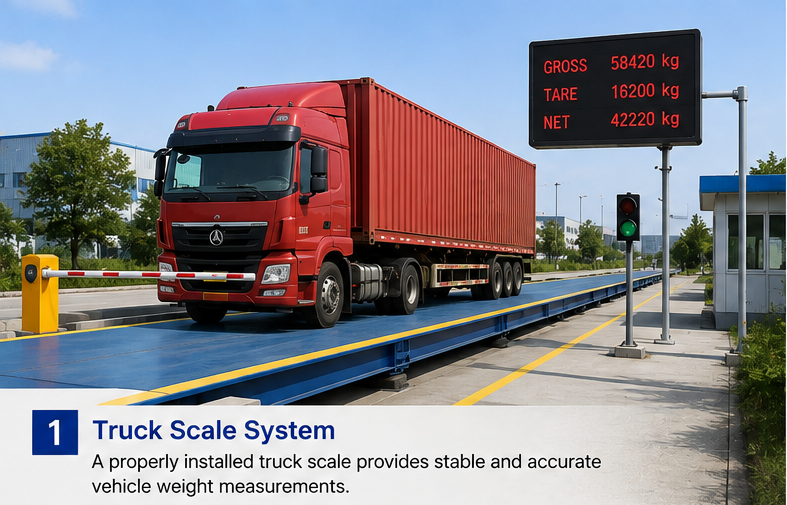
Internationally, OIML R76 does not define the metrological performance and technical requirements of non-automatic weighing instruments using one universal error percentage. Instead, it evaluates accuracy based on factors such as accuracy class, verification scale interval, number of verification scale intervals, actual load range, and operating conditions. Therefore, when purchasing a truck scale, buyers should not simply ask whether the equipment can achieve 0.1% accuracy. More important questions include its accuracy class, verification scale interval, calibration method, and the legal metrology requirements applicable to the project.
What Factors Determine Truck Scale Accuracy?
Load Cells
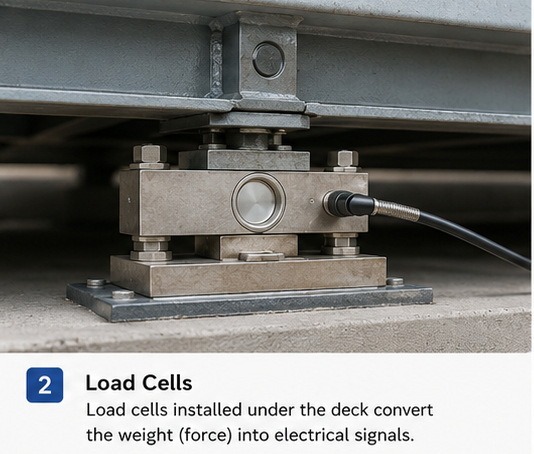
As the core measuring components installed beneath the truck scale deck, load cells directly affect the final weighing result through their consistency, repeatability, temperature performance, signal stability, and installation condition after the truck drives onto the platform and its weight is transferred through the deck to multiple sensors.
Keli Sensing Technology provides a wide range of industrial weighing components, including beam load cells, canister load cells, digital load cells, weighing indicators, and junction boxes. However, even high-quality load cells cannot guarantee final weighing accuracy if the truck scale itself is improperly installed.
Scale Structure and Foundation
The truck scale deck is responsible for accurately transferring the vehicle weight to each load cell. Excessive structural deformation, installation misalignment, foundation settlement, and mechanical contact between the deck and surrounding structures can all affect the weighing result. This shows that civil foundation work and mechanical structural design are themselves part of the truck scale accuracy system rather than peripheral factors unrelated to weighing accuracy.
Installation Quality
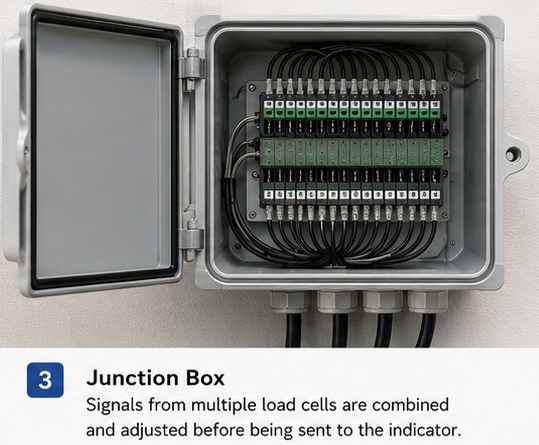
Load cells must receive the applied force correctly in the intended loading direction. Improper sensor installation, damaged cables, poor grounding, water entering the junction box, or mechanical binding of the scale structure can all reduce weighing stability.
Temperature and Operating Environment
Most truck scales are installed outdoors and may be exposed over long periods to temperature fluctuations, rain, dust, mud, vibration, lightning, and electrical interference. Therefore, load cell temperature compensation, protective sealing, grounding, lightning protection, drainage, and routine maintenance can all affect long-term system accuracy.
Vehicle Position
During static weighing, the entire vehicle should be positioned correctly within the effective weighing area. If some wheels are not fully on the scale deck, or if the truck or trailer is in contact with other structures, the displayed weight may not accurately represent the total vehicle weight.
Calibration
Even if a truck scale is properly designed and installed, it must still be correctly calibrated before being placed into formal operation.
What Is Truck Scale Calibration?
Truck scale calibration is the process of comparing the weight displayed by the truck scale with a known reference load and then adjusting or verifying the system based on the results.
Its main purpose is to confirm:
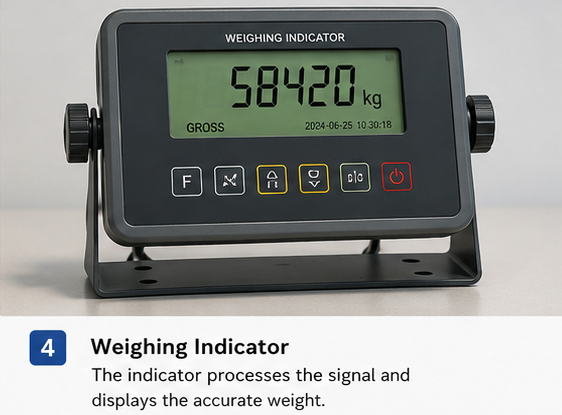
Reference Load → Load Cell Signal → Weighing Indicator Reading
To ensure that the entire measurement chain remains within the specified tolerance range, truck scale calibration should not be treated as a one-time factory procedure. Reinspection or recalibration should be carried out after initial installation, load cell replacement, major repairs, foundation settlement, scale relocation, abnormal weight drift, or when the metrological verification period expires.
How Often Should a Truck Scale Be Calibrated?
There is no universal calibration interval that applies to every truck scale worldwide. The actual calibration frequency generally depends on factors such as local metrology regulations, whether the scale is used for trade, daily weighing frequency, operating environment, equipment maintenance records, previous calibration results, and internal quality management requirements.
For example, truck scales used in high-frequency mining, grain handling, recycling, and logistics operations may perform hundreds of weighing transactions every day, so their inspection and maintenance frequency is usually higher than that of internal process scales with lighter usage. For truck scales used in commercial trade settlement, the verification and calibration requirements of the local metrology authority should always take priority.
Digital Load Cells vs. Analog Load Cells
Both analog and digital load cells can be used in high-accuracy truck scale systems.
Traditional analog systems generally transmit low-level analog signals through cables and combine the outputs from multiple load cells through a junction box.
Digital load cells perform more signal conversion and processing directly at the sensor level.
In practical industrial applications, digital weighing systems offer several advantages, including the ability to diagnose each individual load cell, quickly identify faulty sensors, provide stronger digital communication capabilities, integrate more easily with weighing management software, and better support automated weighing systems and unattended truck scales.
However, one point should be made clear: digital load cells do not automatically mean that a truck scale will be more accurate.
The accuracy of the complete truck scale still depends on: Mechanical Structure + Installation + Load Cells + Weighing Indicator + Calibration + Maintenance. If the foundation is unstable or the weighing deck experiences mechanical interference, digital load cells alone cannot solve all accuracy problems.
Common Causes of Truck Scale Inaccuracy
In real industrial environments, many weighing problems are not caused by the load cells themselves.
Common causes of truck scale weighing errors include foundation settlement, mud and stones accumulating around the weighing deck, restricted deck movement, damaged load cell cables, water entering the junction box, poor grounding, incorrect calibration, mechanical wear, and improper load cell installation. Therefore, truck scale accuracy can be simply understood as:
Sensor Accuracy + Mechanical Stability + Correct Installation + Calibration + Maintenance = Reliable Truck Weighing
This also explains why comparing load cell specifications from different manufacturers alone is not enough to determine the actual weighing performance of a complete truck scale system.
How Does KELISCALES Design for Weighing Accuracy?
KELISCALES integrates the truck scale deck, digital load cells, weighing indicator, and supporting software into a complete vehicle weighing system. Current KELISCALES Truck Scale / Weighbridge systems can use digital load cells and support integration with factory automation and weighing data management systems.
Therefore, the technology relationship can be understood as: International Metrology Standards → Keli Load Cell Technology → KELISCALES Truck Scale System. Compared with simply claiming that “a truck scale is highly accurate,” this technical logic provides a clearer explanation of where truck scale accuracy actually comes from. A reliable truck scale is not simply: A Steel Weighing Deck + A Weight Display. It is a complete metrological system.

Need customized model matching your production line, technical drawings and accurate quotation?
Submit your inquiry now, our engineering sales team will send full solution within 24 working hours.