
A belt scale, weigh feeder, and hopper scale can all measure bulk material.
But they do not solve the same process problem.
The simplest distinction is:
Belt scale — measure material already moving
Weigh feeder — measure and control material feed
Hopper scale (weigh hopper) — weigh a defined batch
Before comparing accuracy specifications, ask:
Do you need to measure the flow, control it, or weigh material in batches?
That usually points toward the right system.
For the basic conveyor-weighing principle, see how a conveyor belt scale works.
1. Belt Scale: Measure an Existing Flow
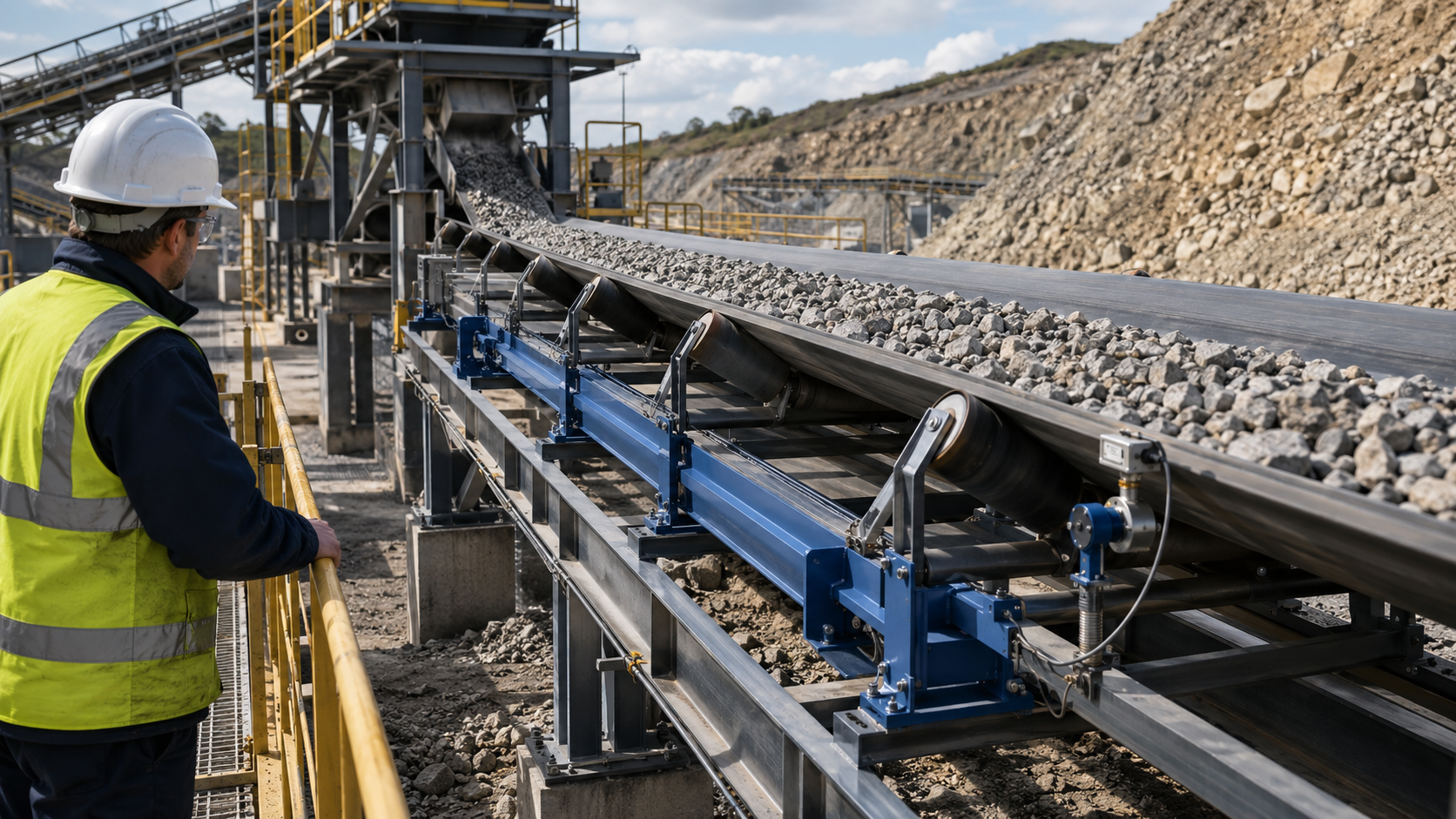
A belt scale works with material that is already moving on a conveyor.
It measures:
belt load + belt speed
and calculates:
flow rate + totalized weight
This makes a belt scale useful for:
- production monitoring
- stockpile transfer
- inventory reconciliation
- material balance
A belt scale normally measures the process rather than controlling it.
If loading changes, the belt tracks differently, or speed varies, the scale has to measure under those conditions.
This is why real conveyor belt scale accuracy depends heavily on the conveyor itself.
2. Weigh Feeder: Measure and Control Flow
A weigh feeder also measures material flow, but the measured value is used as part of a control loop.
Suppose the target feed rate is: 20 t/h
but the actual flow is: 18.5 t/h
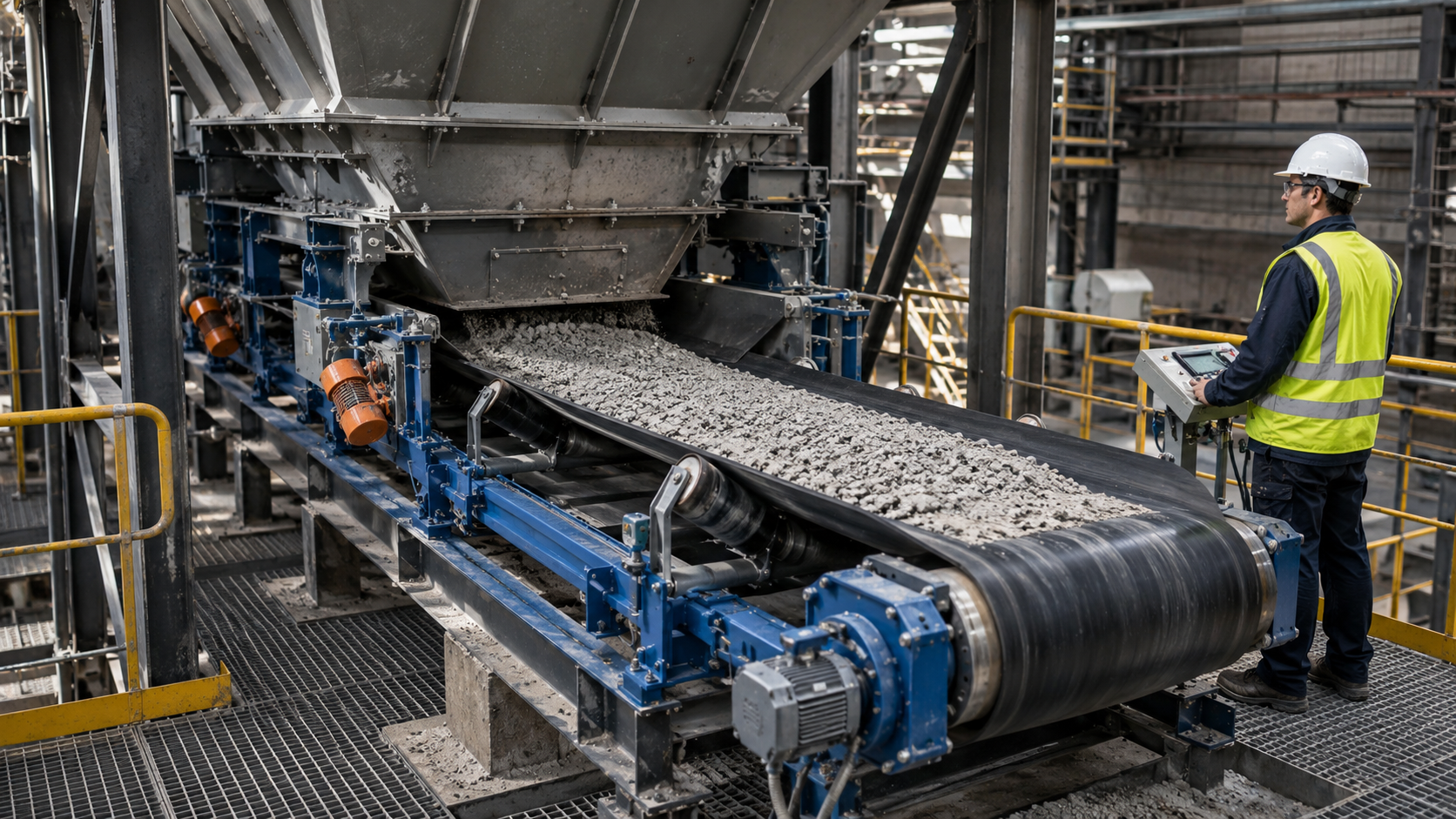
The control system can adjust feeder speed to bring the flow back toward the setpoint.
That makes a weigh feeder suitable for:
- dosing
- blending
- ingredient feeding
- controlled process addition
The key difference is control capability.
A belt scale tells you what the process is doing.
A weigh feeder also helps change what the process is doing.
So a weigh feeder is not simply a “more accurate belt scale.”
It is a weighing system that forms part of the feed-control process.
3. Hopper Scale: Weigh a Batch
A hopper scale, often implemented as a weigh hopper, uses a different measurement method.
Material is collected in a vessel, weighed, and then discharged.
A typical cycle is:
Fill → Weigh → Discharge → Repeat
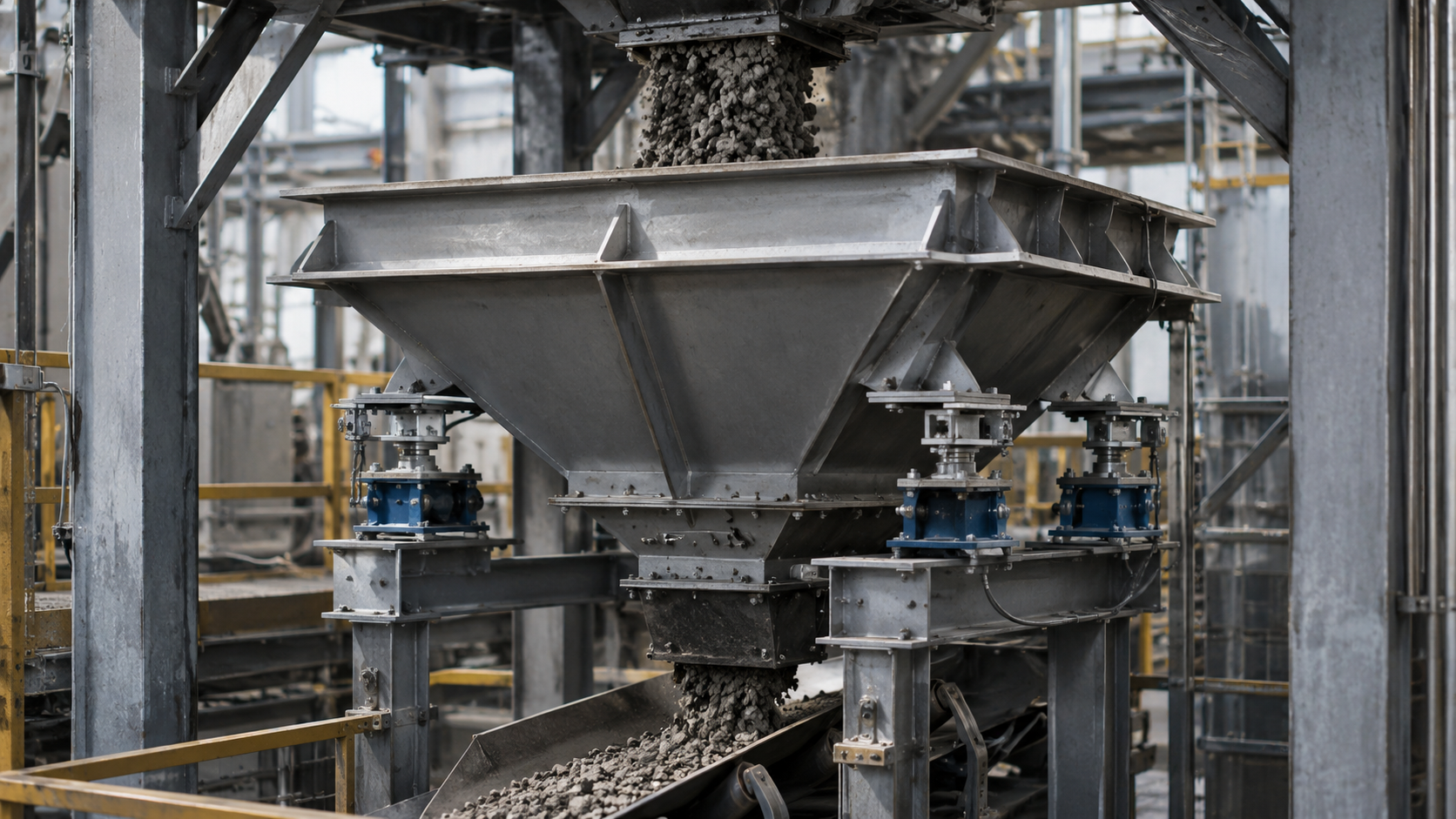
This removes belt-speed measurement from the problem.
But it introduces different mechanical concerns:
- hopper supports
- load-cell mounting
- inlet and outlet gates
- material bridging
- piping restraint
So a hopper scale is not a “more accurate belt scale.”
It is a different weighing architecture for a batch process.
4. The Main Difference Is the Error Environment
Comparing headline accuracy alone can be misleading because each system is affected by different conditions.
Typical influences include:
- idler alignment
- belt tracking
- zero stability
- speed measurement
- buildup
- conveyor geometry
It shares many belt-scale influences but also adds:
- drive response
- feeder dynamics
- control-loop behavior
It removes belt-related effects but introduces:
- vessel restraint
- pipe or duct forces
- gate behavior
- residual material
The better question is:
Which system gives this process the most stable measurement condition?
For belt-scale hardware and force paths, see conveyor belt scale components.
5. Maintenance Cost Depends on What Has to Stay Stable
There is no universal answer to:
“Is a belt weigher cheaper to maintain than a hopper scale?”
A belt scale depends on:
belt → idlers → tracking → buildup → speed sensor → zero
A weigh feeder adds:
drive → motor → control loop
A hopper scale shifts maintenance toward:
supports → load cells → gates → flexible connections → material buildup
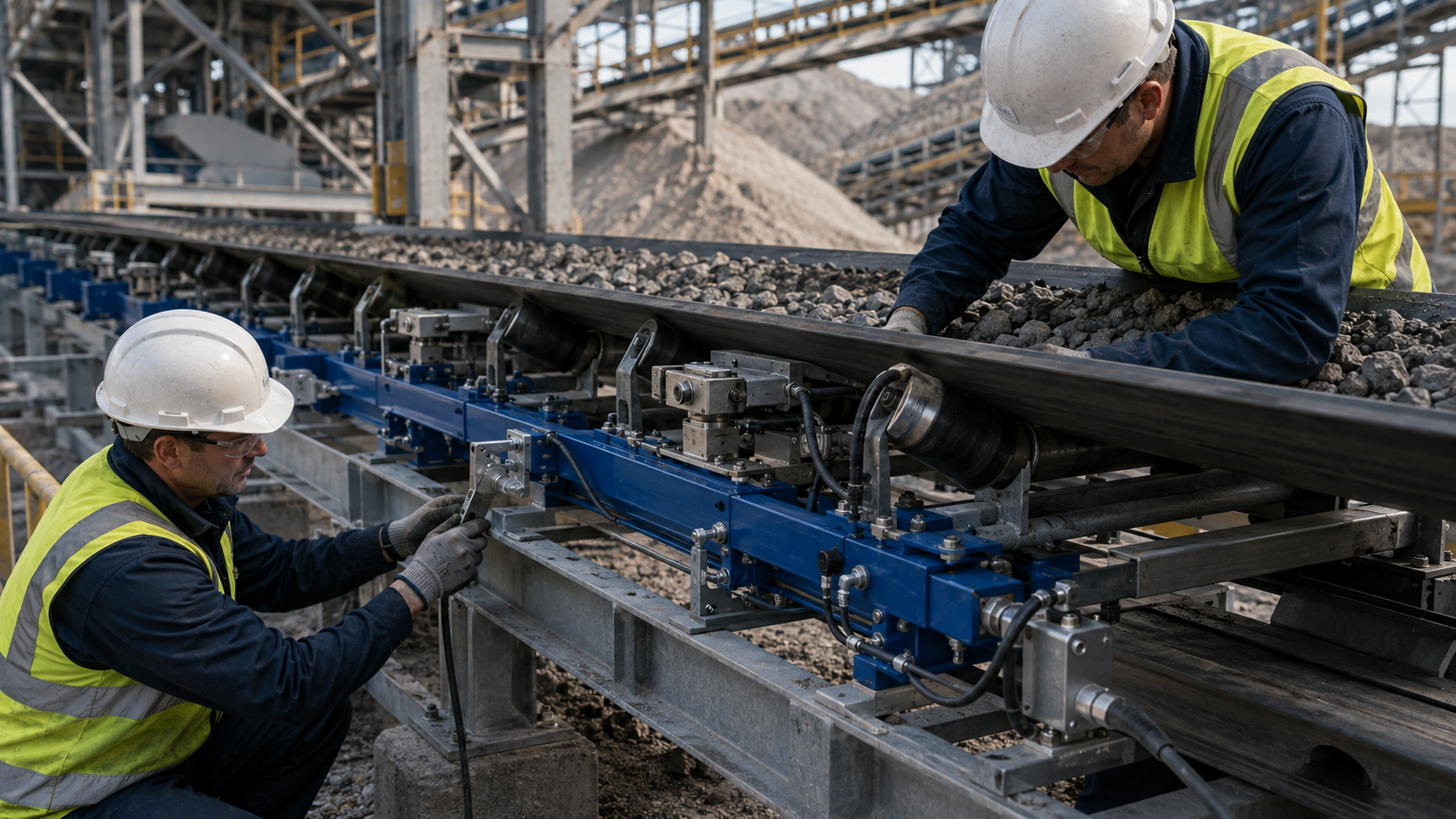
So maintenance cost follows the process architecture, not just the equipment name.
For belt-scale fault patterns and maintenance logic, see conveyor belt scale troubleshooting.
6. Existing Conveyor? A Belt Scale Often Requires Less Process Change
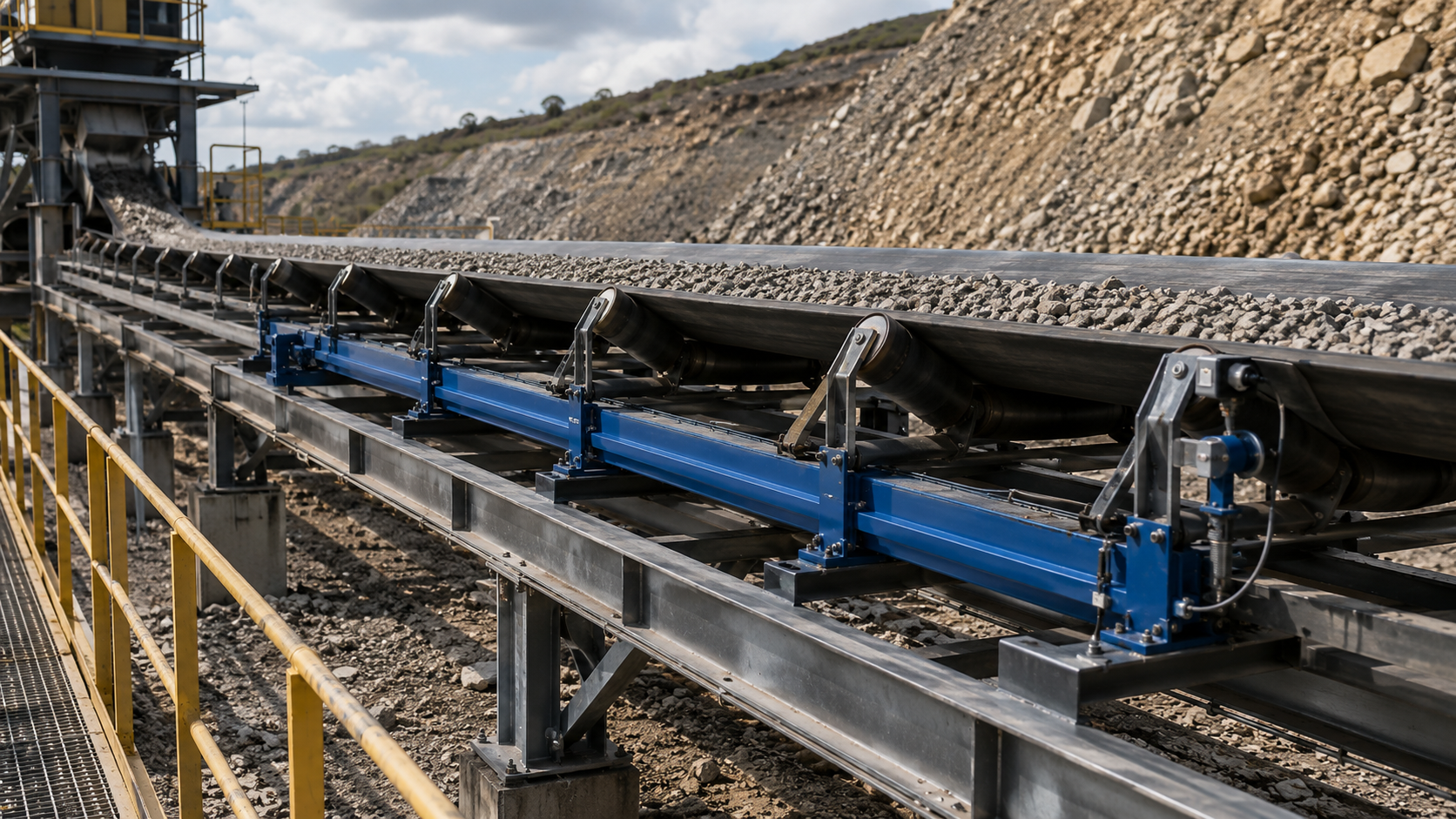
If a plant already has a conveyor running reliably, adding a belt scale can often require less change to the material-handling process.
The weighing system adds:
weigh frame + load cells + speed measurement + integrator
to the existing conveyor.
But the conveyor still needs a suitable weighing zone.
If the only available location is directly below a chute, near a vertical curve, or in a section with unstable tracking, the installation may be physically easy but poor for accurate weighing.
See conveyor belt scale installation for the main site conditions.
A weigh feeder usually changes more of the process because the feeder itself becomes part of material delivery.
A hopper scale may require even more layout change if the process does not already operate in batches.
7. Which System Fits Which Process?
| Process Requirement | Better Starting Point |
| Measure an existing continuous conveyor | Belt scale |
| Record total production without stopping flow | Belt scale |
| Maintain a controlled feed rate | Weigh feeder |
| Dose material continuously | Weigh feeder |
| Weigh individual batches | Hopper scale / weigh hopper |
| Material can stop during weighing | Hopper scale / weigh hopper |
| Add weighing to an existing conveyor | Belt scale |
This is a starting point, not a final specification.
Material behavior, accuracy requirements, installation space, and process layout still matter.
8. When a Belt Scale Is Not the Best Choice
A belt scale is well suited to continuous conveyor weighing.
But it may be the wrong technology if:
- the process requires closed-loop feed-rate control
- individual batch weights are required
- material does not travel consistently with the belt
- there is no stable weighing zone
Calibration cannot fix a mismatch between the weighing method and the process.
If the requirement is:
“Hold this process at exactly 12 t/h,”
a weigh feeder should be considered.
If the requirement is:
“Deliver exactly 1,000 kg per batch,”
a hopper scale or weigh hopper may be more appropriate.
If continuous conveyor weighing is clearly the right method, the next step is to select the correct configuration. See how to choose a conveyor belt scale.
9. Where the LCS-Series Fits
The LCS-Series high-accuracy conveyor belt scale fits applications where material is already moving continuously and the plant needs reliable flow-rate or totalized-weight measurement.
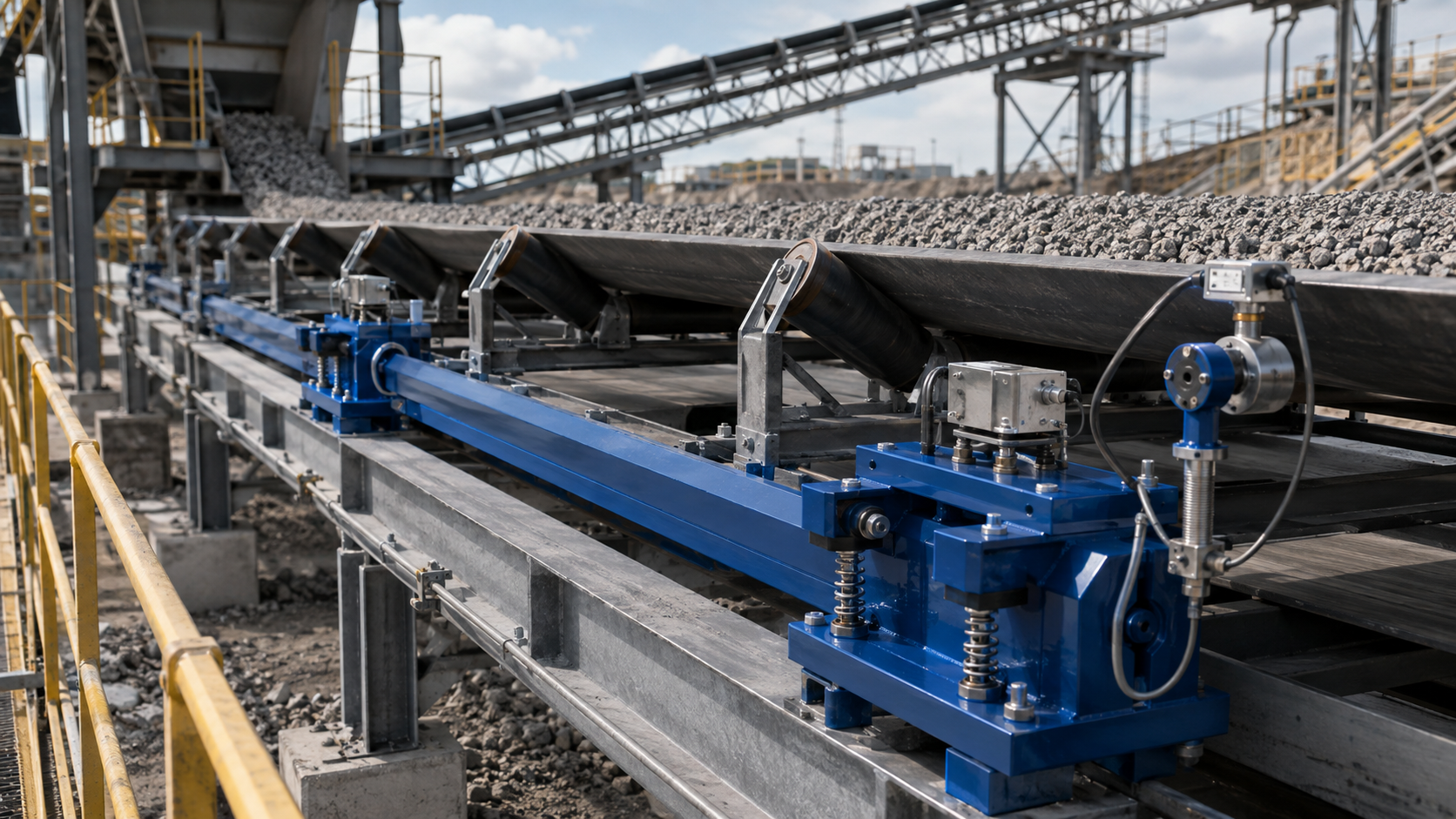
Its floating-balance weighing structure and dual Keli load cells are intended to reduce unnecessary mechanical force paths and sensitivity to off-center loading.
Typical applications include:
- production monitoring
- material transfer
- inventory measurement
- continuous process weighing
If the real requirement is active feed-rate control, evaluate a weigh feeder.
If the process requires defined batch weights, evaluate a hopper scale or weigh hopper.
10. The Main Point
The easiest way to separate these three systems is to look at what happens to the material.
Belt scale: The material keeps moving, and the system measures it.
Weigh feeder: The material keeps moving, and the measurement is also used to control the feed rate.
Hopper scale / weigh hopper: The material is collected and weighed as a defined batch.
So before comparing product specifications, ask:
Does the process need measurement, control, or batching?
That answer usually narrows the choice faster than comparing three accuracy percentages.

Need customized model matching your production line, technical drawings and accurate quotation?
Submit your inquiry now, our engineering sales team will send full solution within 24 working hours.