
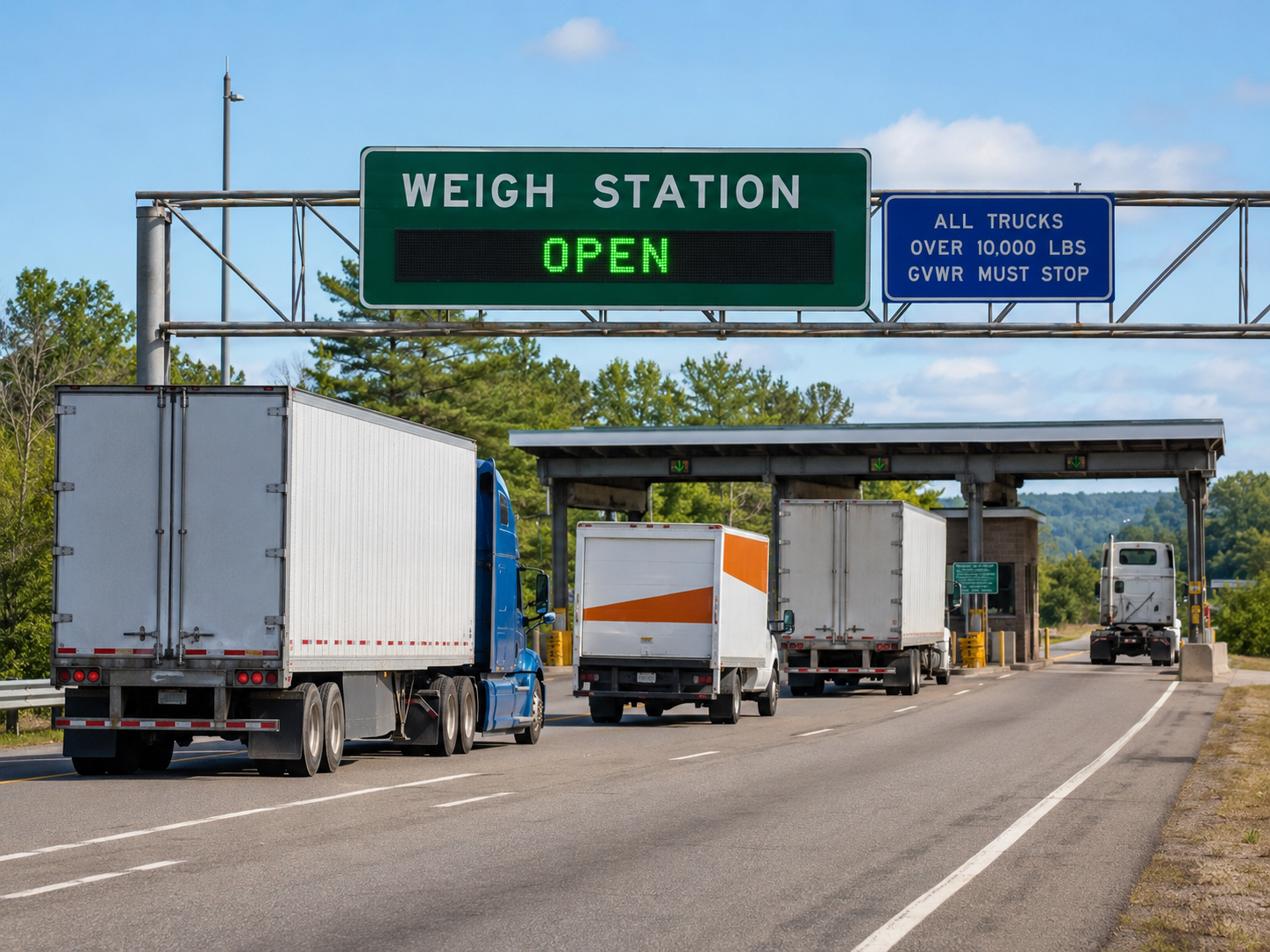
If you are driving a normal tractor-trailer, seeing an open weigh station on the highway usually does not raise many questions. You follow the sign and enter when required.
But what if you are driving a rented U-Haul? What if the tractor has no trailer? What if the truck is under the CDL threshold? And why do some garbage trucks appear to weigh their loads without ever driving onto a truck scale?
These are four slightly different questions:
- Do U-Hauls have to stop at truck scales?
- Does a bobtail truck have to stop at scales?
- Do non CDL trucks have to stop at scales?
- Do garbage trucks have scales?
The mistake is trying to answer all four with one rule such as “commercial trucks stop, private trucks don’t.”
Real-world weigh station rules are more complicated than that.
1. A Weigh Station Is Not the Same as a CAT Scale
This distinction clears up a surprising amount of confusion.
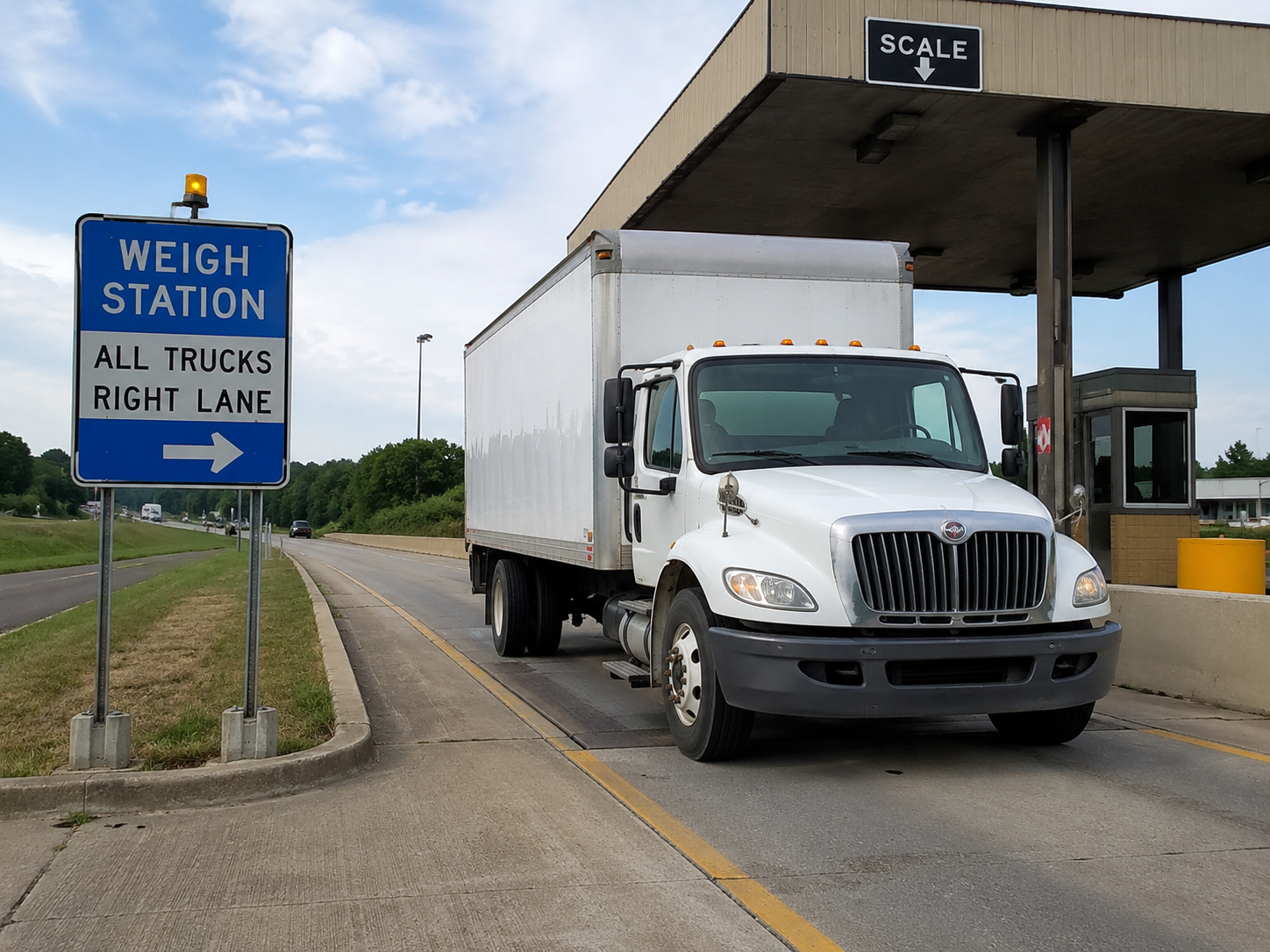
A roadside weigh station, inspection station or port of entry is generally operated by a government transportation or enforcement agency. Depending on state rules and the posted signs, certain vehicles are required to enter.
A CAT Scale is different. CAT Scale operates a network of certified public truck scales, commonly located at truck stops. Drivers use them to check steer, drive, trailer and gross vehicle weights before continuing a trip. CAT Scale describes its network as public certified truck scales rather than roadside enforcement stations.
So when someone asks:
“Do U-Hauls have to stop at truck scales?”
the real question is usually:
“Does my U-Haul have to enter an open government weigh station?”
It does not usually mean that every U-Haul must pull into every CAT Scale it passes.
“Do U-Hauls have to stop at truck scales?”
This distinction is worth understanding before looking at the individual vehicle types.
2. What Actually Determines Whether a Truck Must Stop?
There is no single nationwide “CDL yes or no” test.
The following factors matter much more:
| Factor | Why It Matters |
| Vehicle type | A tractor, box truck, moving truck and pickup may be treated differently |
| GVWR / GCWR | Some rules use the manufacturer’s rated weight rather than today’s load |
| Actual gross weight | Some state requirements use actual vehicle or combination weight |
| Commercial use | Business operation can change which motor-carrier rules apply |
| Personal use | Personal transportation may receive different treatment under some regulations |
| State | Weigh station entry requirements are not identical nationwide |
| Roadside sign | The instruction at the specific station may tell exactly which vehicles must enter |
3. Do U-Hauls Have to Stop at Truck Scales?
Sometimes — and in some states the answer is clearly yes.
The confusing part is that most people renting a U-Haul are not professional truck drivers. They may simply be moving furniture from one apartment to another.
That does not automatically exempt the vehicle from state weigh station rules.
4. What About a Small U-Haul?
This is where vehicle type becomes important.
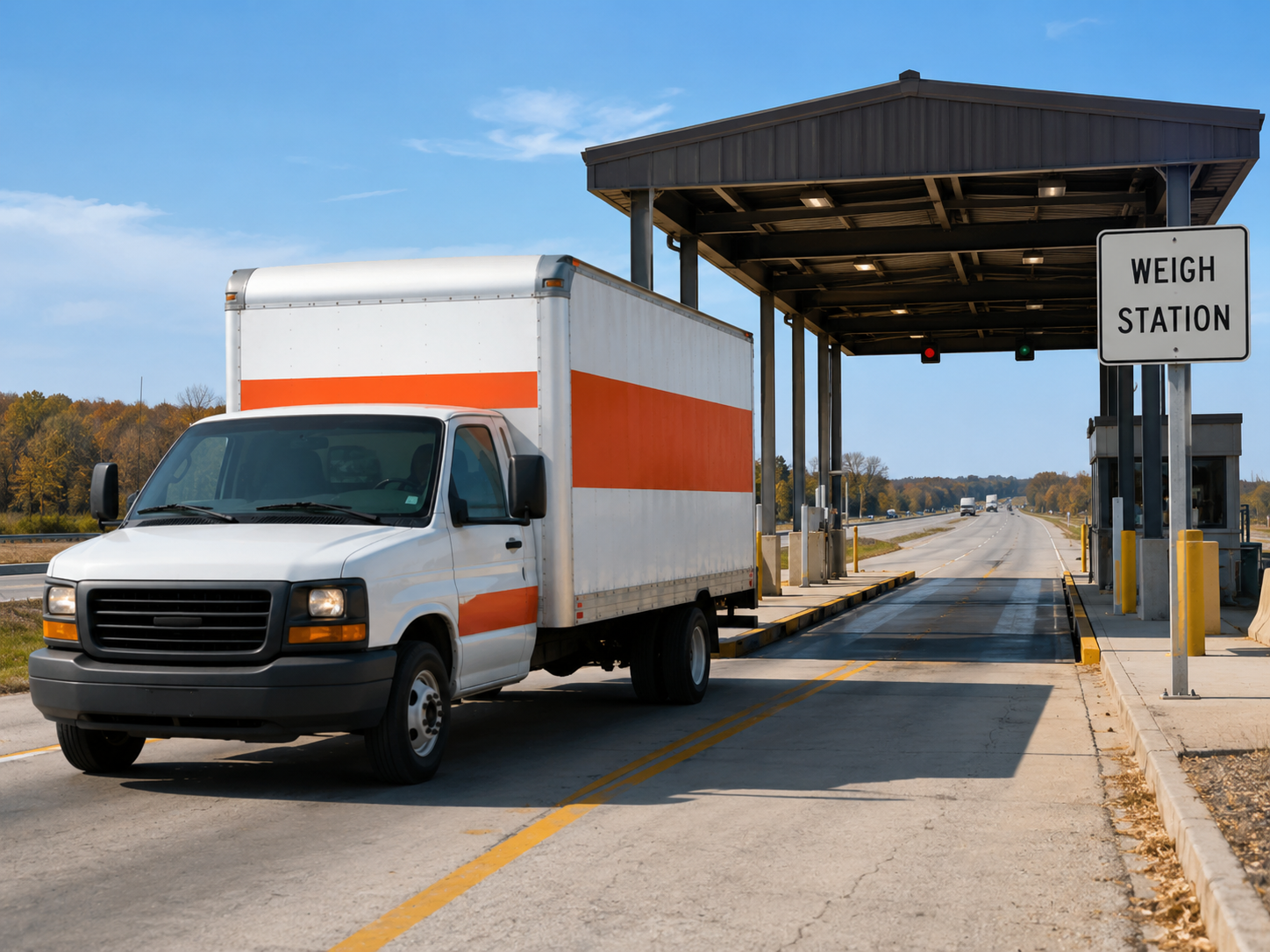
A U-Haul cargo van, pickup and large box-style moving truck are not necessarily treated the same way.
For example, California specifically distinguishes pickup-type rental vehicles from other rental moving trucks.
- Practical answer
When driving a rented moving truck across several states:
Step 1:Know what type of vehicle you rented.
Step 2:Check the GVWR label.
Step 3:Check the rules in the states on your route.
Step 4:Read the sign before every open weigh station.
5. Does a Bobtail Truck Have to Stop at Scales?
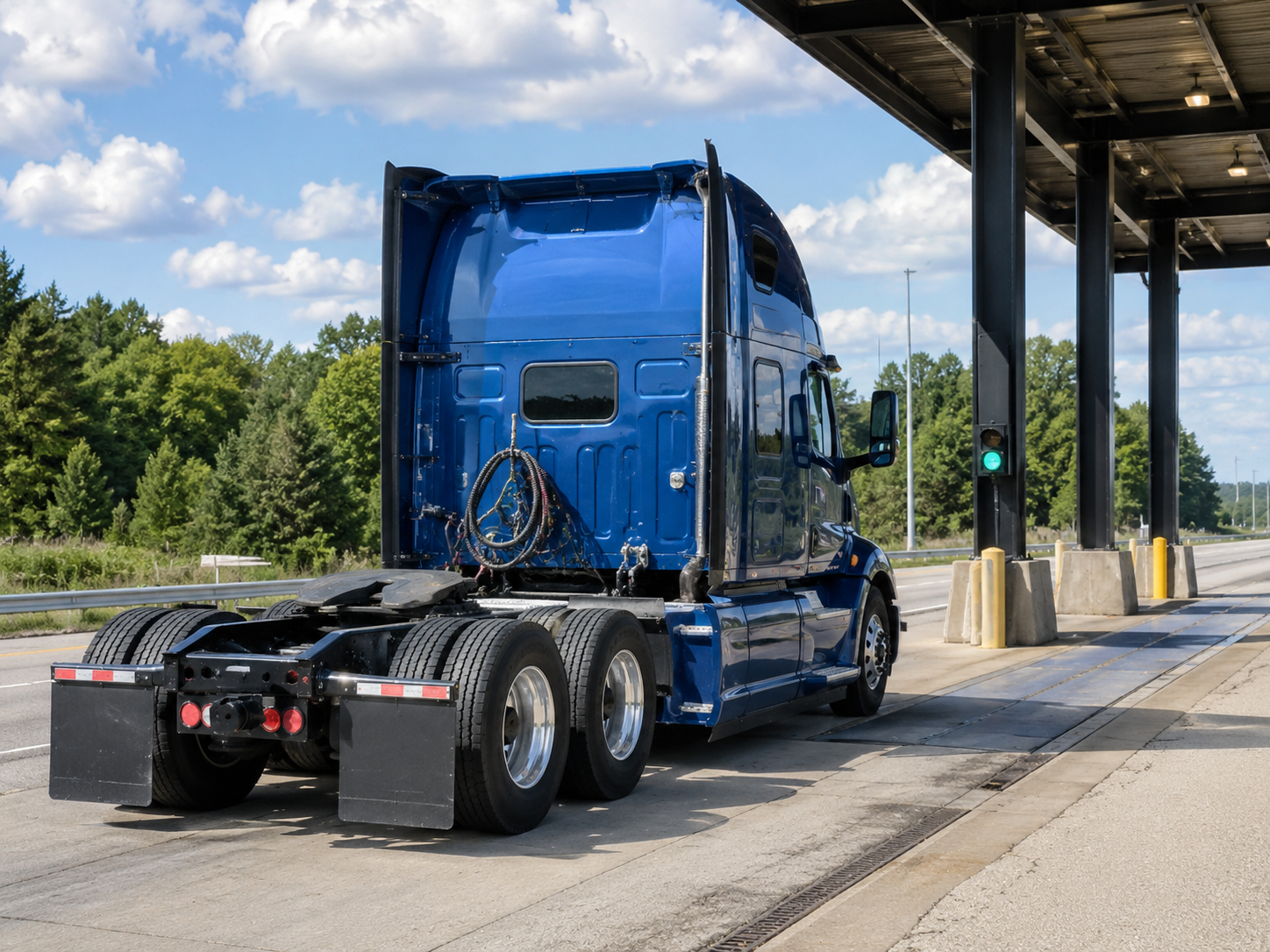
A bobtail is usually a road tractor operating without a semitrailer.
The common assumption is:
“No trailer + no cargo = no scale.”
That shortcut is unreliable.
Removing a trailer reduces the actual weight of the combination, but it does not suddenly turn a heavy commercial tractor into a passenger vehicle.
FMCSA’s federal motor-carrier definition can cover vehicles used in interstate commerce beginning at a GVWR or GCWR of 10,001 pounds in relevant circumstances.
Empty weight and rated weight are not the same thing
Suppose a highway tractor is bobtailing at an actual weight well below what it would weigh with a loaded trailer.
That tells you its current scale weight.
It does not change its manufacturer’s GVWR.
6. Do Non CDL Trucks Have to Stop at Scales?
Yes, some non-CDL trucks can still be required to enter a weigh station.
This is probably the biggest misunderstanding among new commercial drivers.
The reason becomes clearer when you compare two numbers:
10,001 lb
FMCSA’s broader federal commercial-motor-vehicle rules can apply to certain vehicles used in interstate commerce beginning at 10,001 pounds GVWR/GCWR.
26,001 lb
Federal CDL Class A and Class B definitions use the 26,001-pound range, together with other vehicle-configuration requirements.
That creates a very real middle category: commercial trucks that may not require a CDL but are still not ordinary passenger vehicles.
FMCSA describes Class 3 through Class 6 medium-duty trucks as vehicles with GVWRs from 10,001 to 26,000 pounds, including box trucks and city delivery vehicles.
That is exactly why this sentence is unreliable: “I don’t have a CDL, so I don’t stop at scales.”
7. GVW, GVWR and GCWR: Three Numbers Drivers Should Not Mix Up
This is another area where many weigh-station articles stop too early.
- GVW — Gross Vehicle Weight
What the vehicle actually weighs now.
- GVWR — Gross Vehicle Weight Rating
The maximum rated vehicle weight specified for the vehicle.
- GCWR — Gross Combination Weight Rating
The rated weight of the vehicle and trailer combination.
FMCSA uses GVWR and GCWR in determining whether certain vehicles or combinations fall within federal commercial-motor-vehicle rules.
This matters especially when a truck is empty.
An empty truck may have a low GVW today while still having a much higher GVWR.
8. Do Garbage Trucks Have Scales?
Some do. But “garbage truck scale” can actually mean three different things.
Some refuse trucks have weighing equipment installed directly on the vehicle.
Rice Lake describes onboard weighing systems that use load cells integrated with a truck and specifically lists garbage trucks among typical applications.
This can help the operator answer:
How much payload is on the truck right now?
Some front-loader refuse trucks can go one step further and weigh individual containers during collection.
Air-Weigh, for example, offers a refuse-truck system with sensors mounted on the lifting arms. The system can measure bin weight while the container is being handled.
This is different from simply knowing the total weight of the truck.
That distinction matters to waste companies that want to know how much material is being collected from a particular customer or container.
Even when a garbage truck has onboard weighing, landfills and transfer stations may still use a full-size truck scale.
The usual process is:
Loaded truck → Gross Weight
Unload the waste.
Empty truck → Tare Weight
Then:
Net Waste Weight = Gross Weight − Tare Weight
Fairfax County describes exactly this gross-minus-tare process for weight-based waste disposal.
- Example
Loaded garbage truck: 58,700 lb
Empty garbage truck: 35,200 lb
Waste delivered: 23,500 lb
So when someone asks “do garbage trucks have scales?”, the best answer is not simply “yes.”
The better answer is:
Some garbage trucks have onboard payload or bin-weighing systems, while waste facilities also use full-size truck scales for gross, tare and net weight transactions.
9. Four Questions, Four Direct Answers
- Do U-Hauls have to stop at truck scales?
Sometimes, yes.
It depends on the state and vehicle type. California specifically requires rental moving trucks such as U-Haul to stop at weigh stations, while rental pickups can be treated differently. South Dakota and Florida also have rules that can require rental moving trucks to enter.
- Does a bobtail truck have to stop at scales?
It may have to.
A tractor does not automatically become exempt simply because the trailer has been disconnected. Its commercial classification, rated weight, state rules and station signs still matter.
- Do non CDL trucks have to stop at scales?
Yes, some do.
CDL requirements and weigh station requirements are not the same. A medium-duty commercial truck can fall below the CDL threshold while still being subject to other commercial-vehicle or state scale requirements.
- Do garbage trucks have scales?
Some garbage trucks do.
They may use onboard payload scales or systems that weigh individual refuse containers. Landfills and transfer stations also commonly use full-size truck scales to determine gross, tare and net waste weight.
10. Final Thoughts
The easiest mistake to make around truck scales is looking for one number or one rule that answers every situation.
There isn’t one.
A U-Haul can be privately operated and still have to enter a weigh station in some states. A bobtail tractor can be empty and still remain a heavy commercial vehicle. A truck can fall below the CDL threshold and still be subject to other commercial-vehicle requirements. And a garbage truck may use an onboard scale for payload control while a landfill uses a completely separate truck scale for billing and waste records.
For a driver approaching a roadside scale, the safest sequence is simple:
Check the vehicle → check the GVWR/GCWR → check the state → read the sign.

Need customized model matching your production line, technical drawings and accurate quotation?
Submit your inquiry now, our engineering sales team will send full solution within 24 working hours.