
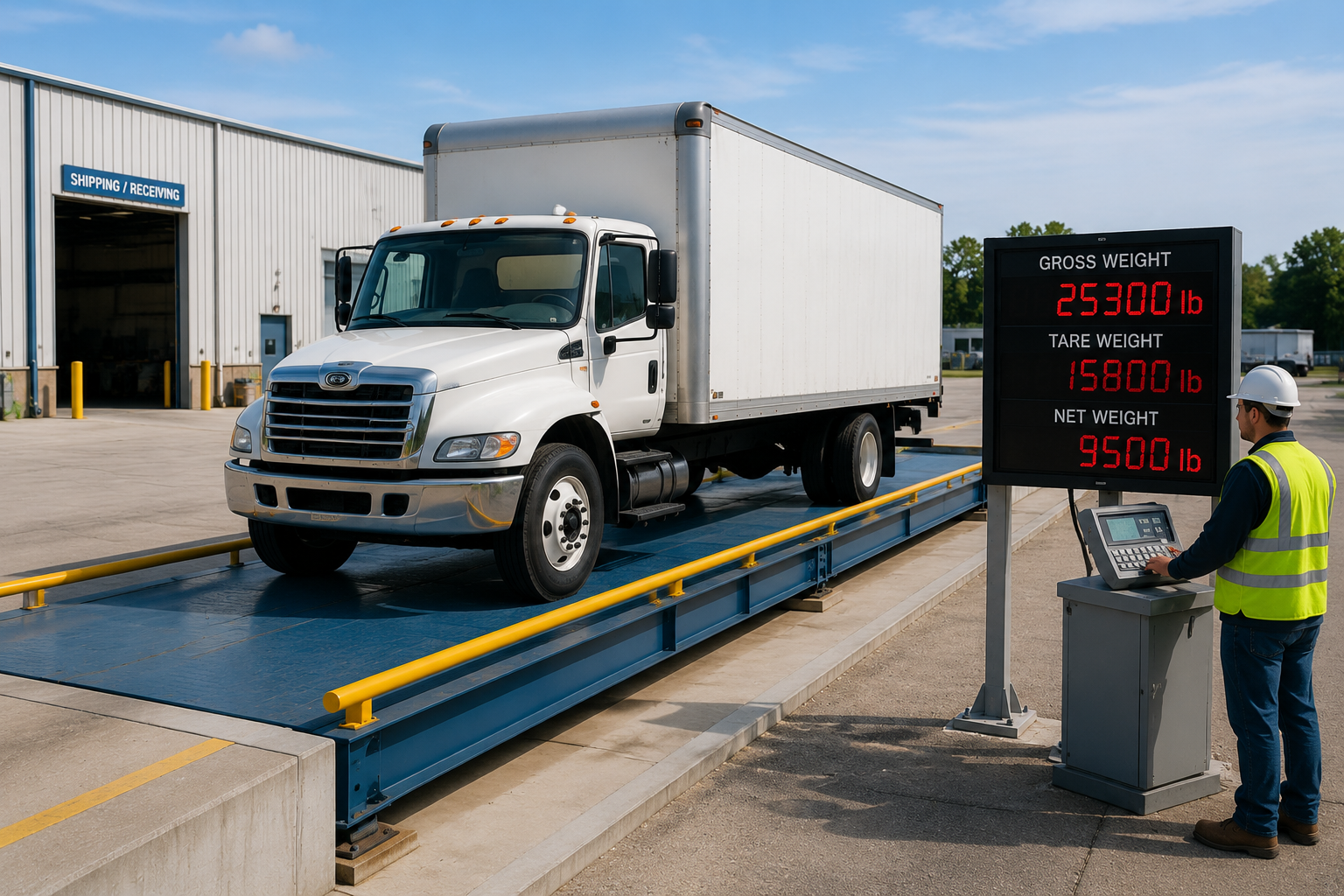
When people search for “how much weight can a box truck scale”, they are usually trying to answer a simple but important transportation question:
How much weight can my box truck safely carry?
For delivery companies, warehouse operators, and fleet managers, knowing the weight limit of a box truck is not only about avoiding fines. It also affects fuel consumption, tire life, vehicle safety, and transportation efficiency.
In real operations, many loading problems happen because operators estimate cargo weight instead of checking the actual vehicle weight.
A truck may look properly loaded but still have an overloaded axle due to uneven cargo distribution.
This is why professional transportation companies use weighing systems to check vehicle weight before trucks leave the loading area.
1. What Does “How Much Weight Can a Box Truck Scale” Mean?
The answer depends on several factors:
- GVWR
- Empty vehicle weight
- Axle capacity
- Vehicle configuration
- Total vehicle weight
- Front axle weight
- Rear axle weight
- Cargo weight
Accurate weighing helps companies confirm whether a truck is loaded safely before transportation.
2. Understanding GVWR and Payload Capacity
GVWR is the maximum total weight a vehicle is designed to safely operate.
It includes:
- Vehicle itself
- Cargo
- Driver
- Additional equipment
- Fuel
For example:
A box truck with a GVWR of 26,000 lbs should not operate above this total weight.
Curb weight refers to the weight of the truck when it is empty.
It usually includes:
- Standard equipment
- Required fluids
- Fuel
But it does not include cargo.
Payload capacity is the actual cargo weight a truck can carry.
The basic calculation is:
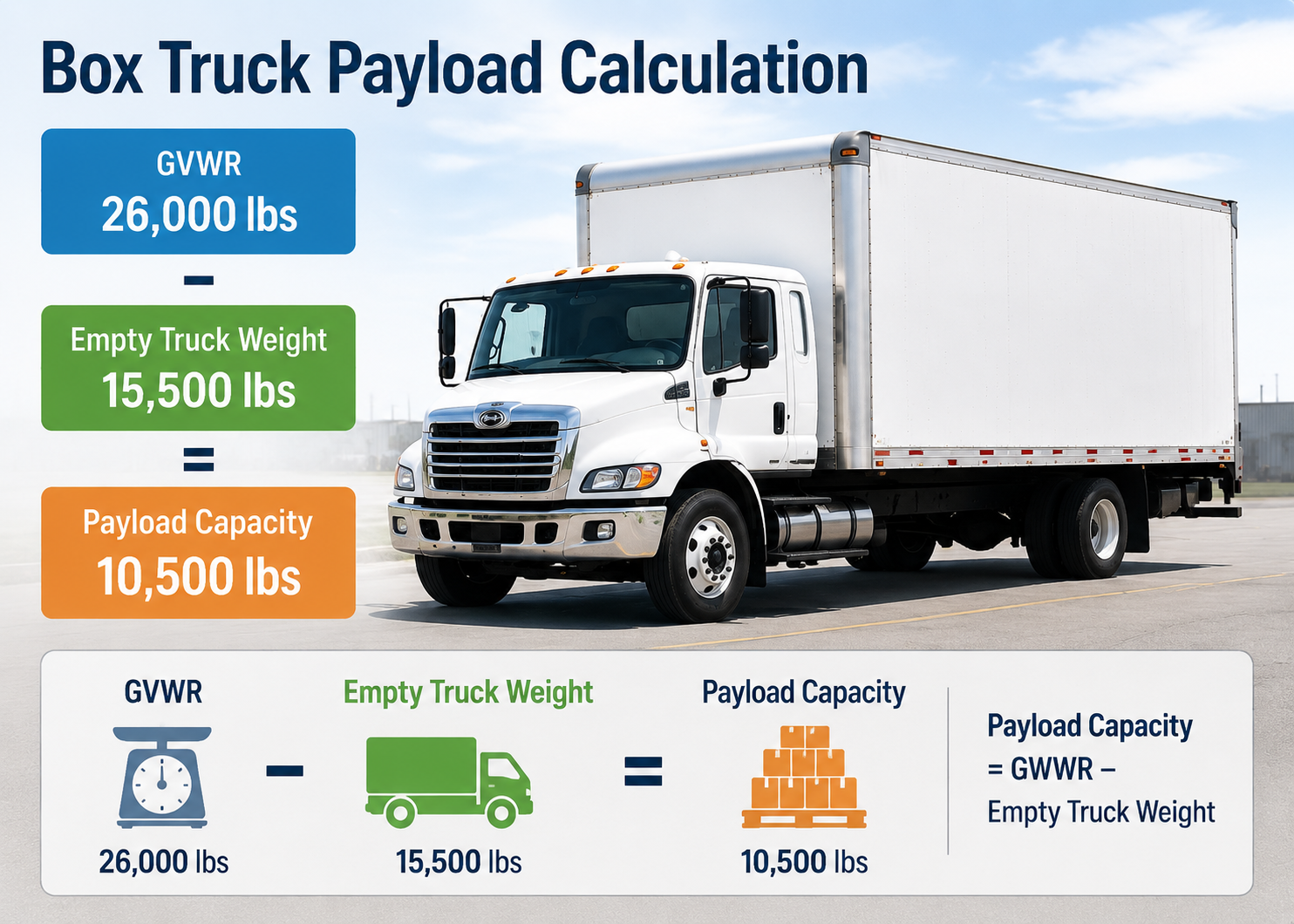
Payload Capacity = GVWR – Curb Weight
Example:
A 26 ft box truck:
GVWR: 26,000 lbs
Empty truck weight: 15,500 lbs
Calculation: 26,000 – 15,500 = 10,500 lbs
The estimated payload capacity is: 10,500 lbs
3. How Much Weight Can Different Box Trucks Carry?
The actual payload capacity depends on the truck manufacturer and vehicle design.
The following numbers are common reference ranges:
| Box Truck Size | Typical GVWR | Approximate Payload Capacity |
| 10 ft box truck | 10,000–12,000 lbs | 3,000–4,000 lbs |
| 16 ft box truck | 14,500–16,000 lbs | 5,000–7,000 lbs |
| 20 ft box truck | 18,000–22,000 lbs | 7,000–10,000 lbs |
| 24 ft box truck | 22,000–26,000 lbs | 8,000–12,000 lbs |
| 26 ft box truck | Up to 26,000 lbs | 10,000–13,000 lbs |
These values are only general references.
The actual loading limit should always be checked according to:
- Manufacturer specification plate
- GVWR rating
- Axle weight limits
- Tire load ratings
4. Why Axle Weight Matters for Box Trucks?
Many drivers focus only on the total vehicle weight. However, in professional transportation operations, axle weight is equally important.
A box truck can be within its total GVWR limit but still have one overloaded axle.
This usually happens when heavy cargo is placed in the wrong position.
For example:
A loaded box truck:
Gross Vehicle Weight: 24,000 lbs
Front Axle Weight: 6,000 lbs
Rear Axle Weight: 18,000 lbs
The total weight may appear acceptable, but the rear axle could exceed its rated capacity.
Overloaded axles can cause:
- Faster tire wear
- Suspension damage
- Reduced braking performance
- Poor vehicle stability
For this reason, many fleet operators use axle weighing equipment to check how weight is distributed across the vehicle.
5. How to Weigh a Box Truck Before Driving
Check Vehicle Ratings
Confirm:
- GVWR
- Axle capacity
- Tire load rating
These numbers define the safe operating range of the truck.
Load the Truck Normally
The truck should be tested under normal working conditions.
The weight should include:
- Regular cargo
- Driver
- Equipment normally carried
Measure Vehicle Weight
Use a suitable weighing system to record:
- Gross vehicle weight
- Cargo weight
- Axle loads
Adjust Loading Position
If the weight distribution is not balanced:
- Move heavy cargo
- Reduce unnecessary items
- Recheck the vehicle
A few minutes of weight checking before departure can help avoid much bigger transportation problems later.
6. Choosing the Right Truck Weighing Solution
Different businesses have different weighing requirements.
A small delivery company may only need occasional weight checks, while a factory or logistics center may require daily vehicle weighing.
Common solutions include:
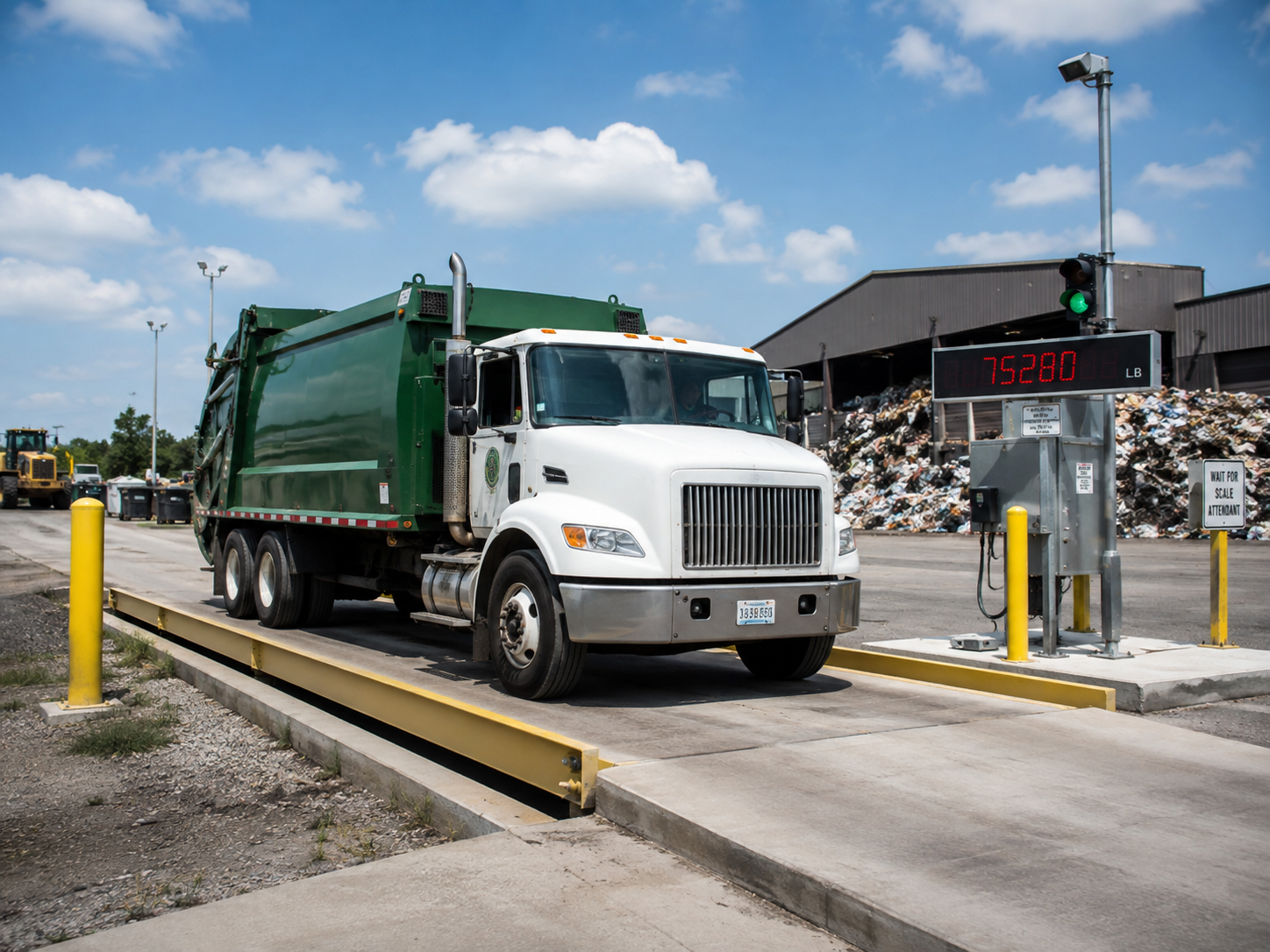
A truck weighbridge is designed for complete vehicle weighing.
It is commonly used in:
- Logistics centers
- Warehouses
- Manufacturing plants
- Industrial sites
Advantages:
- Full truck weight measurement
- Suitable for frequent operation
- Provides reliable weight records
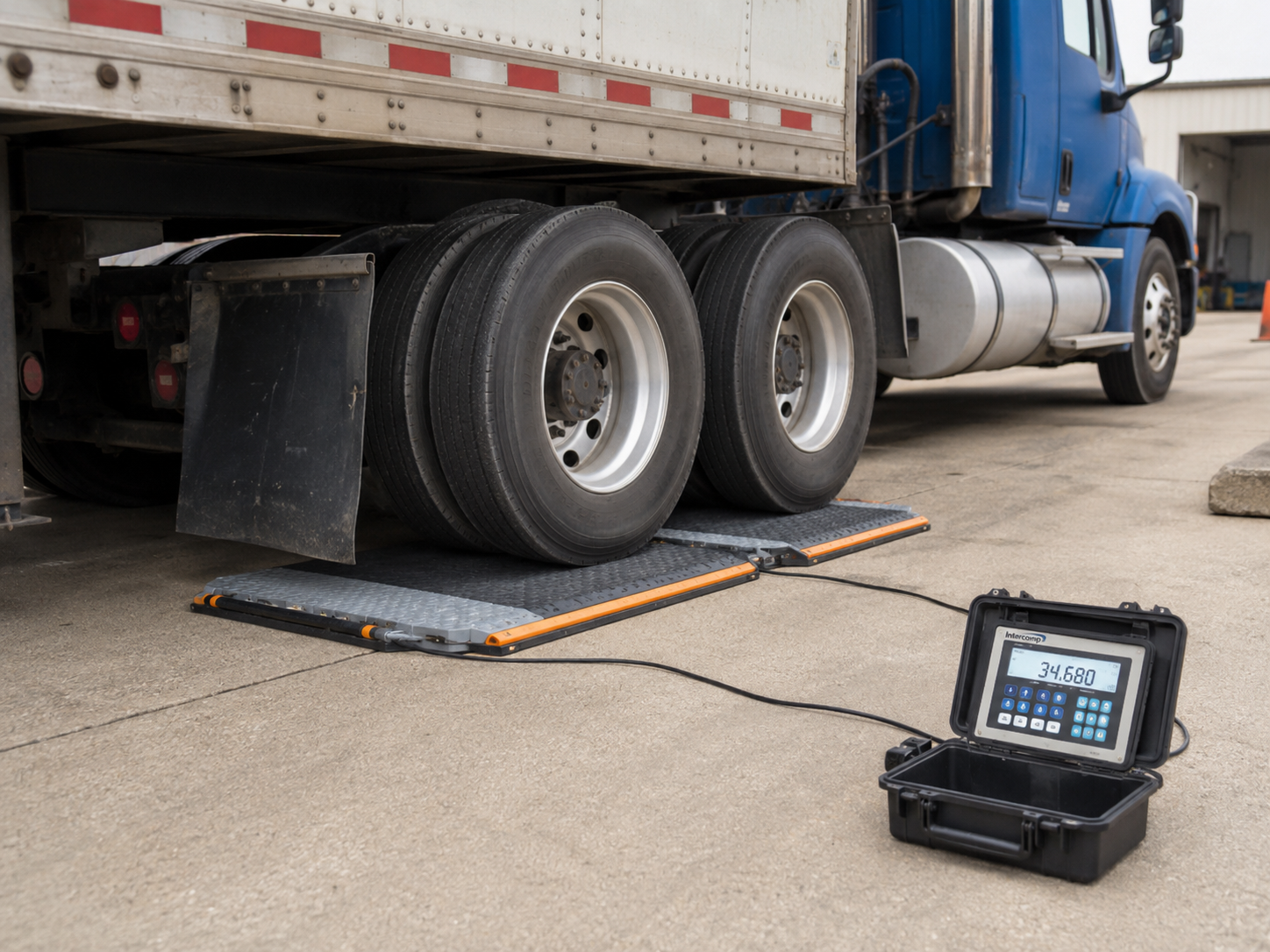
Portable axle scales are suitable when flexible weighing is required.
Typical applications:
- Fleet inspections
- Temporary weighing locations
- Construction sites
Advantages:
- Easy to install
- Flexible use
- Measures axle loads separately
7. FAQ
A 26 ft box truck can typically carry around 10,000–13,000 lbs of cargo, depending on its GVWR, chassis design, and configuration.
Yes. Portable axle scales can measure box truck axle loads and help operators check whether weight is distributed correctly.
Because total vehicle weight does not always show how the load is distributed. One overloaded axle can create safety problems even when total weight is acceptable.
8. Conclusion: Accurate Weighing Helps Improve Transportation Safety
Understanding how much weight can a box truck scale is not only about knowing the maximum cargo limit.
Safe transportation requires attention to:
- GVWR
- Payload capacity
- Axle weight
- Cargo distribution
- Actual vehicle weight
For logistics companies, warehouses, and industrial users, accurate weighing helps reduce overload risks and improve daily operations.
Keli Scales provides truck weighing solutions including truck weighbridge systems and axle weighing equipment for different transportation and industrial applications.
If you need a suitable weighing solution for box trucks or commercial vehicles, our team can help you select the right system based on your vehicle type and operating requirements.
Contact Keli Scales for a customized truck weighing solution.

Need customized model matching your production line, technical drawings and accurate quotation?
Submit your inquiry now, our engineering sales team will send full solution within 24 working hours.